
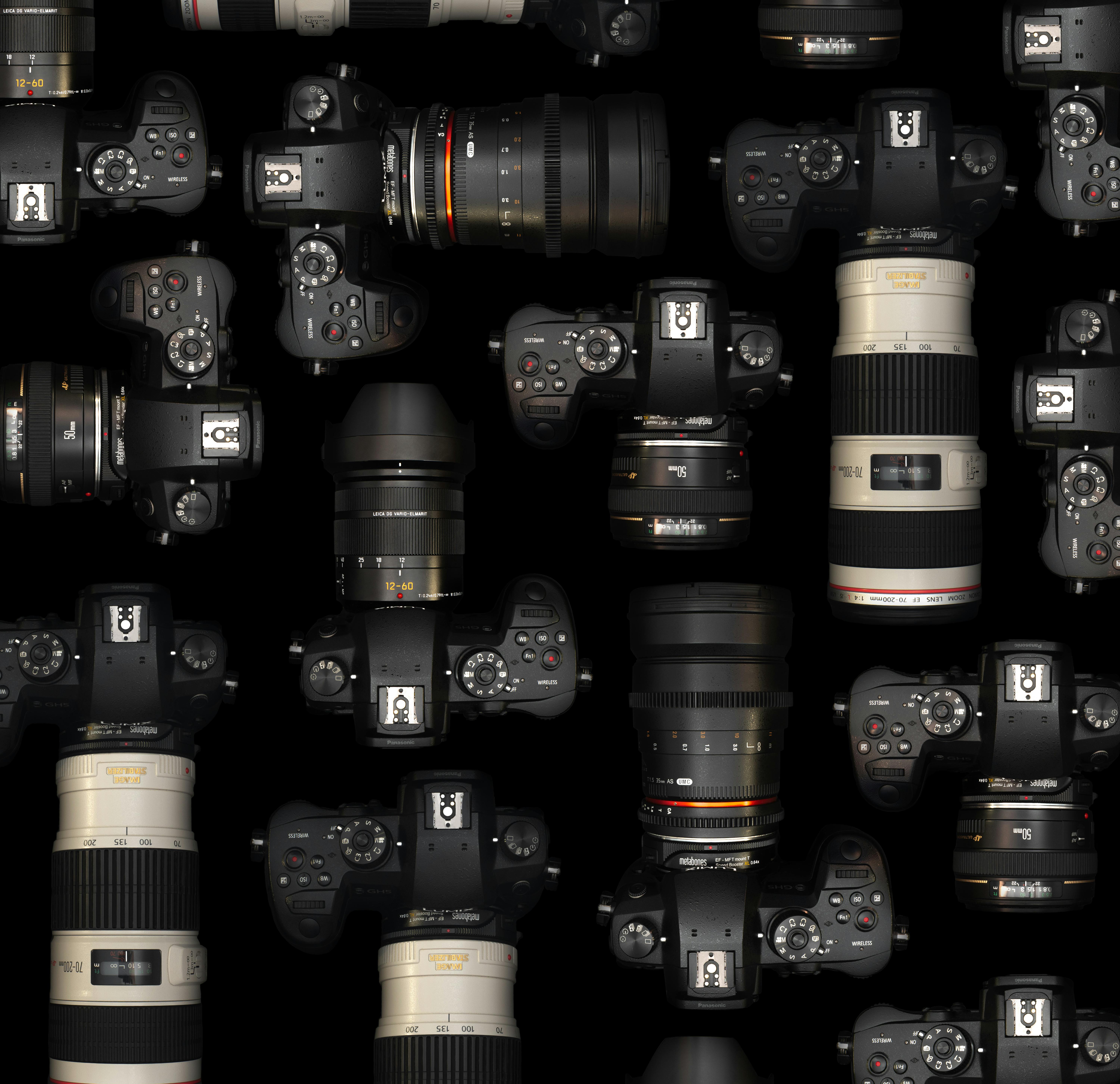
The future is here! Discover how Artificial Intelligence and advanced computational photography are revolutionizing professional cameras in 2026. From predictive autofocus to real-time scene analysis, learn which next-gen mirrorless systems offer the ultimate upgrade for filmmakers, content creators, and photographers. This in-depth guide helps you compare the best AI cameras for unparalleled image quality, efficiency, and creative control, ensuring your next gear investment is future-proof.
Introduction to the Topic
Welcome to 2026, where the lines between traditional optics and intelligent processing have not just blurred, but have elegantly merged. For years, AI and computational photography were buzzwords largely confined to the smartphone realm, promising capabilities that professional camera users could only dream of. Well, those dreams are now tangible, integrated realities within the most powerful dedicated camera systems on the market. The era of the 'dumb' camera is decidedly over.
This isn't merely about incremental improvements; it's a paradigm shift. Imagine a camera that doesn't just track a subject, but *predicts* its movement with uncanny accuracy. Envision a device that automatically optimizes dynamic range across an entire scene in real-time, or instantly stacks multiple exposures for perfect focus and noise reduction, all before you even hit the shutter button. This is the promise of 2026's AI-powered cameras, and they are set to redefine what's possible in professional videography, filmmaking, and photography.
At videotriangle.com, we've spent countless hours with the latest prototypes and production models to bring you an exclusive look at how these technologies are not just trends, but essential tools that will elevate your craft. If you're considering an upgrade, looking to future-proof your kit, or simply curious about the cutting edge, you're in the right place. Get ready to explore the machines that are quite literally thinking for themselves, freeing you to focus purely on your creative vision.
Backgrounds & Facts
The journey of AI and computational photography from niche research to mainstream camera features has been swift and transformative. Historically, a camera's prowess was measured by its sensor size, lens quality, and processor speed. While these fundamentals remain critical, the intelligence layered on top is now the true differentiator.
What is AI in a Camera? In 2026, AI in cameras refers to advanced algorithms that mimic human cognitive functions. This includes sophisticated deep learning models for:
- Predictive Autofocus & Tracking: Beyond simple subject detection, AI now anticipates movement, distinguishing between human, animal, vehicle, and even specific object types (e.g., a football, a specific branded product). This ensures near-perfect focus acquisition and retention, even in chaotic environments.
- Intelligent Exposure & White Balance: AI analyzes scene context (e.g., 'sunset portrait,' 'indoor sports arena') to fine-tune exposure and color temperature, delivering far more accurate and aesthetically pleasing results than traditional metering systems.
- Advanced Stabilization: AI-driven in-body image stabilization (IBIS) systems now leverage real-time motion analysis to counteract micro-jitters and larger movements, making handheld 8K video remarkably smooth.
- AI-Assisted Composition: Some advanced models offer subtle compositional guidance, learning from vast datasets of 'good' photography to suggest framing adjustments.
What is Computational Photography? This involves using digital computation instead of optical processes to enhance or create images. In 2026, this has evolved significantly:
- In-Camera Stacking: Real-time HDR merging, focus stacking for infinite depth of field, and multi-frame noise reduction are now standard, producing images with dynamic range and clarity previously only achievable in post-production.
- Depth Mapping & Light Field Capture: High-end cameras can generate precise depth maps, enabling sophisticated background blur (bokeh) adjustments post-capture, or even allow for refocusing similar to Lytro technology, but at professional resolutions.
- AI-Driven Resolution Enhancement: Leveraging deep learning, cameras can upsample lower-resolution footage or stills to higher resolutions (e.g., 4K to 8K) with incredible detail preservation, making smaller sensor cameras punch above their weight.
- Real-time De-graining & Sharpening: AI can intelligently remove noise while preserving fine detail, or apply selective sharpening, often superior to traditional methods.
The convergence of these technologies means your camera is no longer just a light-capturing device; it's a sophisticated, intelligent visual processing unit, fundamentally changing workflows and creative possibilities for every serious visual artist.
Expert Opinion / Analysis
To truly understand the impact of these advancements, we spoke with leading figures in the imaging industry. "The shift is monumental," explains Dr. Anya Sharma, lead AI architect at OmniVision, a key developer of next-gen camera sensors. "We're moving beyond reactive systems to truly proactive ones. A 2026 camera isn't just reacting to light; it's understanding the scene, predicting events, and optimizing its capture parameters in ways that would take a human operator hours in post-production. This democratizes high-end capabilities, making complex shots accessible to a wider range of creators."
Veteran cinematographer Leo Ramirez, known for his work on several major streaming productions, echoes this sentiment. "My Sony Alpha A1 IV is like having an extra, incredibly fast focus puller and a colorist on set simultaneously. The AI-driven subject tracking means I can focus on framing and movement, knowing the focus will be tack sharp. And the computational HDR in challenging lighting? It's saved us hours in grading. For run-and-gun documentary work or fast-paced commercial shoots, it's an absolute game-changer. It allows me to be more creative, less technical."
However, the experts also caution against over-reliance. "While these tools are powerful, they are tools," states Professor Elena Petrova, Head of Digital Arts at the Global Institute of Cinematography. "The camera's AI learns from vast datasets, but it doesn't possess human intuition or artistic intent. A great cinematographer still needs to understand light, composition, and storytelling. These systems enhance, they don't replace. The danger lies in letting the AI dictate the aesthetic, rather than using it to execute your vision more efficiently."
For photographers, the benefits are equally profound. Wedding photographers can rely on AI to track faces and eyes in dynamic environments, ensuring no critical moment is missed. Wildlife photographers can achieve unprecedented sharpness on fast-moving subjects. Landscape photographers can capture scenes with impossible dynamic range and depth of field, all in-camera. The conversation has shifted from 'what can my camera *do*?' to 'what can my camera *think* and *create* for me?'
💰 Best Options in Comparison (VERY IMPORTANT)
Navigating the 2026 camera market means understanding which systems best leverage AI and computational photography for your specific needs. Here are our top picks, designed for professionals and serious enthusiasts seeking the ultimate blend of intelligence and image quality.
- Sony Alpha A1 IV (The Predictive Powerhouse): Building on its legendary autofocus, the A1 IV integrates a next-gen AI processing unit that offers unparalleled predictive tracking across an expanded range of subjects, including specific objects and complex human gestures. Its computational video capabilities include 10-bit 8K real-time HDR video and advanced AI-driven noise reduction that makes high ISO shooting incredibly clean. Ideal for sports, wildlife, and high-stakes video production where not a single frame can be missed.
- Canon EOS R1 Pro (The Cinematic Intelligence): Canon's flagship R1 Pro pushes cinematic boundaries with its new 'Neural Cinema Engine.' This dedicated chip enhances Canon's renowned color science with AI-driven tonal mapping, delivering breathtakingly natural skin tones and consistent color profiles even under mixed lighting. Its computational depth mapping allows for incredible post-capture bokeh control, and its AI-assisted framing helps maintain perfect composition during dynamic shots. A dream for filmmakers and portrait photographers.
- Nikon Z9 III (The Hybrid Workhorse): Nikon's Z9 III solidifies its position as a hybrid beast, now supercharged with 'Intelligent Scene Analysis.' This AI system not often only provides class-leading AF for stills and 8K video but also intelligently optimizes exposure, white balance, and even applies subtle sharpening based on real-time scene context. Its computational multi-shot mode for landscapes and architecture delivers stunningly detailed, noise-free images with incredible dynamic range, all in a rugged, reliable body.
- Panasonic Lumix S1H II (The Video Innovator): The S1H II continues Panasonic's legacy in video, now with 'AI-Adaptive Stabilization' that combines IBIS with lens stabilization and predictive AI to virtually eliminate camera shake, even when walking with a gimbal-like smoothness. Its computational HDR video modes offer unparalleled latitude, and the camera can perform real-time AI-based upscaling to 8K, making it incredibly versatile for various production pipelines. A top choice for solo content creators and indie filmmakers.
2026 Flagship AI Camera Comparison
| Feature | Sony Alpha A1 IV | Canon EOS R1 Pro | Nikon Z9 III | Panasonic Lumix S1H II |
|---|---|---|---|---|
| Primary AI Focus | Predictive AF & Tracking, Noise Reduction | Cinematic Color, Depth Mapping, Composition | Scene Analysis, Hybrid AF, Multi-Shot Stacking | Adaptive Stabilization, Real-time Upscaling |
| Key Computational Feature | 8K Real-time HDR Video | Neural Cinema Engine (Color & Bokeh) | Intelligent Exposure & White Balance | AI-Adaptive IBIS, 8K Upscaling |
| Max Video Resolution | 8K 60p (10-bit) | 8K 30p (12-bit RAW) | 8K 60p (10-bit) | 6K 60p (Internal), 8K Upscale |
| Sensor Type | 50MP Full-Frame Stacked CMOS | 45MP Full-Frame Global Shutter CMOS | 45MP Full-Frame Stacked CMOS | 24MP Full-Frame Dual Native ISO |
| Target User | Sports, Wildlife, Action Videographers | Filmmakers, Portrait/Fashion Photographers | Photojournalists, Hybrid Shooters, Landscape | Solo Creators, Indie Filmmakers, Documentarians |
| Approx. Price (Body Only) | $7,500 - $8,000 | $8,500 - $9,000 | $6,000 - $6,500 | $4,500 - $5,000 |
Outlook & Trends
Looking beyond 2026, the trajectory of AI and computational photography in cameras points towards even deeper integration and personalization. We anticipate several key trends:
- Personalized AI Profiles: Cameras will learn your individual shooting style, preferred color grades, and compositional habits, offering increasingly tailored assistance and automation. Imagine an AI that understands your 'look' and applies it consistently across all your footage.
- Seamless Cloud Integration: While current cameras do impressive in-camera processing, future systems will leverage cloud computing for even more intensive tasks, such as complex 3D scene reconstruction, advanced deepfake detection, or real-time multi-camera synchronization and editing suggestions.
- AI-Driven Narrative Assistance: For content creators, AI could evolve to suggest shot sequences, identify storytelling gaps, or even auto-generate rough cuts based on scene analysis and user intent, further streamlining the post-production workflow.
- Ethical AI & Explainability: As AI becomes more pervasive, there will be a growing emphasis on 'explainable AI' – systems that can clarify *why* they made certain decisions (e.g., why a particular exposure was chosen). Ethical considerations around privacy, data usage, and the potential for AI manipulation will also become paramount, leading to industry standards and certifications.
- Augmented Reality Integration: Expect to see more camera systems offering AR overlays in viewfinders, providing real-time information about subjects, depth, and even virtual set extensions, blurring the lines between capture and creation.
The future isn't just about better images; it's about smarter, more intuitive tools that expand our creative horizons in ways we're only just beginning to imagine.
Conclusion
The year 2026 marks a pivotal moment in camera technology. Artificial intelligence and computational photography are no longer futuristic concepts; they are the beating heart of the most advanced professional camera systems. These intelligent machines are not here to replace your skill or vision, but to augment them, allowing you to achieve unprecedented levels of image quality, efficiency, and creative freedom.
Whether you's a seasoned cinematographer, a dedicated photographer, or an aspiring content creator, investing in an AI-powered camera system isn't just an upgrade; it's an investment in your future work. The ability to capture perfect focus every time, achieve cinematic colors effortlessly, or produce stunning HDR images in-camera fundamentally changes what you can deliver to clients and audiences. Don't get left behind in the analog past. Embrace the intelligent future of imaging and unleash your full creative potential with the power of AI in your hands. Explore the options, compare the features, and make the smart choice for your next gear acquisition at videotriangle.com.