
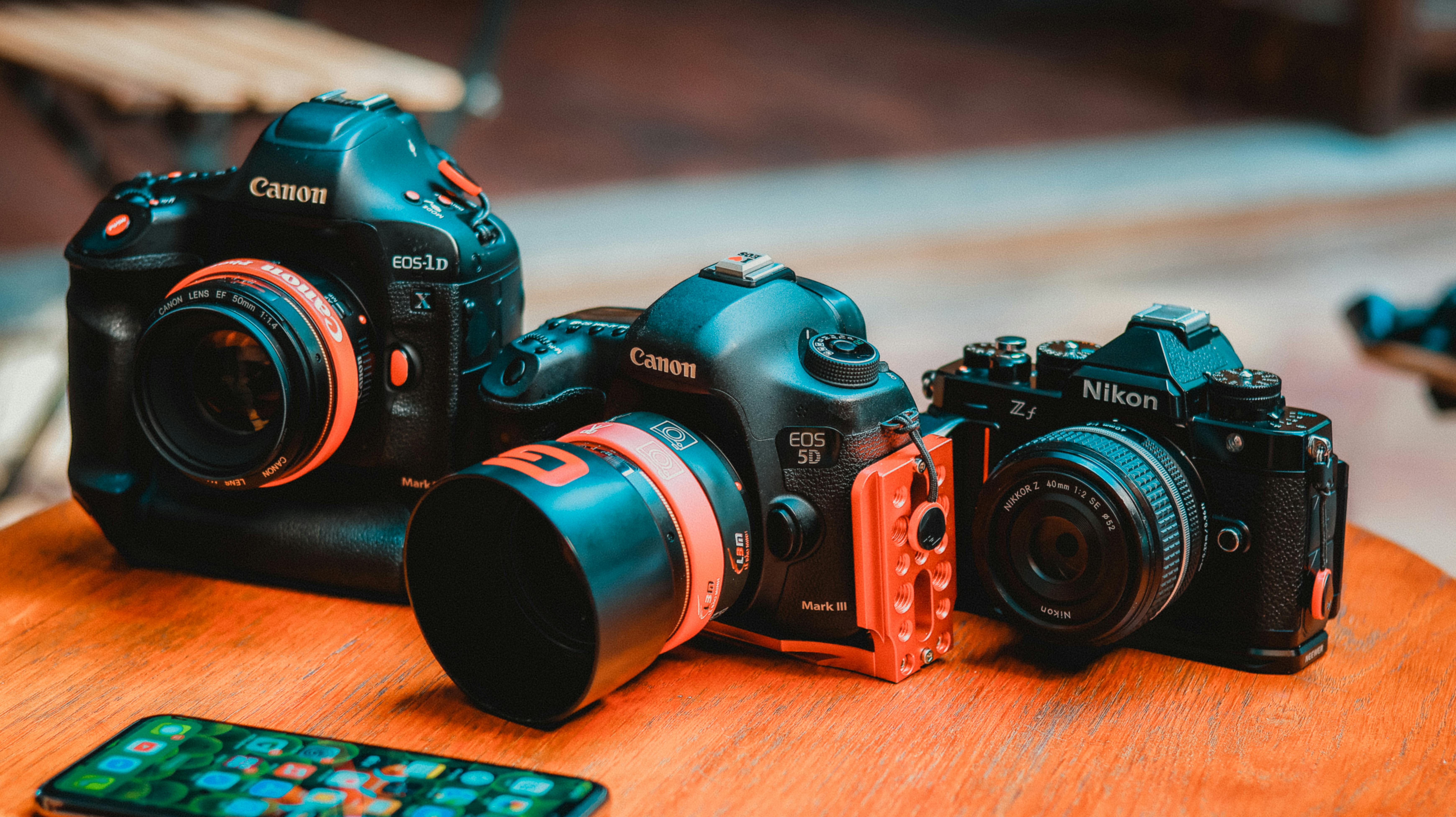
The future of video production is here: AI cameras. In 2026, intelligent filmmaking tools are no longer a luxury but a necessity for creators seeking maximum production value with minimal crew. Discover how advanced AI tracking, computational video, and smart stabilization are transforming solo shoots, boosting your RPM, and which cutting-edge gear offers the best return on investment for videographers, content creators, and indie filmmakers.
Introduction to the Topic
Welcome to 2026, where the lines between ambitious solo creator and full-fledged production house are blurring faster than ever. For years, the dream of a camera that could anticipate your needs, track subjects flawlessly, and even enhance your footage in real-time felt like science fiction. Today, thanks to relentless innovation in artificial intelligence, that dream is a tangible reality. AI-powered cameras are not just a trend; they are the bedrock of modern video production, fundamentally reshaping how we capture, stabilize, and even compose our shots.
This isn't about mere autofocus improvements; we're talking about sophisticated neural networks embedded directly into your gear, capable of understanding scenes, predicting motion, and executing complex cinematic maneuvers with astonishing precision. For videographers, YouTubers, live streamers, and indie filmmakers, this means unprecedented creative freedom, significant cost savings by reducing the need for extensive crews, and a dramatic uplift in production quality. If you're looking to elevate your content, optimize your workflow, and maximize your earnings per mille (RPM) by delivering consistently high-quality visuals, understanding and investing in the right AI camera technology is no longer optional – it's essential.
Backgrounds & Facts
The journey of AI in cameras began subtly, with early iterations of face detection and basic subject tracking. Fast forward to 2026, and the technology has matured into a powerful suite of computational video capabilities. At its core, AI in cameras leverages machine learning algorithms trained on vast datasets of images and video. These algorithms allow the camera's processor to recognize objects, differentiate between subjects and backgrounds, understand depth, and even interpret human intent or emotion.
Key AI functionalities now commonplace in leading cameras include:
- Advanced Subject Tracking: Beyond simple face detection, AI now offers multi-subject tracking, animal eye AF, vehicle recognition, and even predictive tracking that anticipates a subject's movement before it happens, ensuring razor-sharp focus even in chaotic environments.
- Intelligent Stabilization: Combining optical, in-body, and digital stabilization with AI-driven motion analysis, cameras can now produce gimbal-like smoothness even handheld, compensating for complex movements and micro-jitters.
- Computational Video: This is where AI truly shines for video. Real-time dynamic range optimization, intelligent noise reduction in low light, automatic white balance and exposure adjustments based on scene context, and even AI-assisted color grading profiles are becoming standard.
- Automated Framing & Composition: Some dedicated AI cameras can autonomously pan, tilt, and zoom to keep subjects perfectly framed according to cinematic rules like the rule of thirds, freeing the operator to focus on performance or directing.
- Gesture & Voice Control: Integrating AI with natural language processing allows for intuitive control over camera functions, enabling truly hands-free operation in many scenarios.
This rapid evolution is driven by increasingly powerful, miniaturized processors (often dedicated AI chips), sophisticated software algorithms, and the growing demand from content creators for more efficient and higher-quality production tools. The result is a paradigm shift: cameras are no longer just recording devices; they are intelligent partners in the creative process.
Expert Opinion / Analysis
“The impact of AI on video production in 2026 cannot be overstated,” states Dr. Anya Sharma, lead AI vision researcher at LuminaTech Labs. “We’re moving beyond automation to true augmentation. AI isn't replacing the cinematographer; it's empowering them to achieve previously unattainable shots with smaller teams, or even entirely solo. Imagine a single creator managing a multi-camera setup, each intelligently tracking different subjects, while the main camera simultaneously optimizes exposure and color in real-time. That's the power AI brings.”
Industry analysts agree that AI is democratizing high-end production. “For years, complex tracking shots required dedicated focus pullers, camera operators, and even motion control rigs,” explains Mark Jensen, editor-in-chief of ‘Digital Cinema Today.’ “Now, a significant portion of that capability is embedded in a prosumer mirrorless camera or a dedicated AI tracking unit. This isn't just about saving money; it's about enabling a new generation of filmmakers to tell their stories without prohibitive technical barriers. The creative ceiling has been significantly raised for individual creators.”
However, experts also caution against over-reliance. “While AI is incredibly powerful, it's a tool, not a replacement for human artistic vision,” Dr. Sharma adds. “Understanding composition, lighting, and narrative remains paramount. The best results come from creators who leverage AI to execute their vision more efficiently, rather than letting AI dictate the entire creative process.” The ethical considerations around AI, such as potential for deepfakes and data privacy, are also continuously being addressed through industry standards and regulations, ensuring responsible innovation.
💰 Best Options in Comparison (VERY IMPORTANT)
Navigating the AI camera landscape in 2026 can be daunting, but certain products stand out for their innovation, performance, and value. Whether you’re a solo streamer, an indie filmmaker, or a professional videographer, there’s an AI solution tailored to your needs. Here are our top picks, designed to maximize your production value and optimize your RPM:
- LuminaStream X3 Pro: The Solo Creator's Dream
This dedicated AI tracking camera is a game-changer for content creators, educators, and live streamers. Its advanced multi-subject tracking, predictive motion analysis, and auto-framing capabilities mean you can be both the talent and the camera operator simultaneously. With intelligent zoom and gesture control, it’s like having a personal camera crew in a compact package. Perfect for tutorials, vlogs, and online presentations. - OmniVision R10: Professional Powerhouse with Integrated AI
Building on years of mirrorless innovation, the OmniVision R10 integrates next-generation AI directly into its core. Its AI Autofocus system is unparalleled, capable of tracking eyes, faces, bodies, animals, and even specific vehicles with uncanny accuracy across the entire frame. Beyond focus, its computational video engine delivers real-time HDR fusion, advanced low-light enhancement, and AI-driven color science, making it a favorite for professional cinematographers and high-end videographers demanding pristine image quality and intelligent assistance. - StabilizeFlow Pro 2026: The Smart Gimbal Alternative
For run-and-gun videographers and action sports enthusiasts, the StabilizeFlow Pro 2026 isn't just a gimbal; it's an intelligent stabilization system. Its autonomous subject tracking works independently of your camera's AI, allowing it to follow subjects with incredible fluidity and even execute pre-programmed cinematic moves. With integrated obstacle avoidance and a remote AI director mode, it’s ideal for dynamic shoots where a dedicated camera operator isn't feasible.
To help you make the best purchasing decision, here's a detailed comparison:
| Feature | LuminaStream X3 Pro | OmniVision R10 | StabilizeFlow Pro 2026 |
|---|---|---|---|
| Type | Dedicated AI Tracking Camera | Professional Mirrorless (AI Integrated) | AI-Powered Gimbal/Stabilizer |
| Key AI Capabilities | Multi-subject tracking, auto-framing, intelligent zoom, gesture control | Next-gen AI AF (all subjects), computational video (HDR, NR), AI color science | Autonomous subject tracking, intelligent path planning, obstacle avoidance, cinematic moves |
| Target User | Solo Content Creators, Streamers, Educators | Professional Filmmakers, Cinematographers, High-End Videographers | Run-and-Gun Videographers, Event/Action Shooters, Indie Filmmakers |
| Max Resolution (Video) | 4K 60fps | 8K 30fps, 4K 120fps (internal RAW) | Supports up to 8K (camera dependent) |
| Price Range (Approx.) | $800 - $1,200 | $4,500 - $6,000 (body only) | $1,000 - $1,800 (with integrated camera options) |
| Pros | Truly autonomous, excellent for solo work, compact, user-friendly | Unmatched image quality, industry-leading AF, deep creative control, future-proof | Superior stabilization, autonomous camera movement, versatile, reduces crew size |
| Cons | Limited manual control, fixed lens (typically), not for high-end cinematic work | High price point, complex for beginners, requires significant lens investment | Can be bulky, learning curve for advanced features, camera compatibility (if not integrated) |
Each of these options represents a significant leap forward in video production technology. Investing in the right AI camera for your specific needs will not only streamline your workflow but also dramatically enhance the quality and professionalism of your video content, directly impacting your audience engagement and monetization potential.
Outlook & Trends
The trajectory of AI in camera technology for 2026 and beyond is nothing short of revolutionary. We anticipate even deeper integration of AI across the entire filmmaking pipeline. Expect cameras that can not only track subjects but also predict narrative beats, suggest optimal shot compositions based on script analysis, and even offer real-time editing suggestions during capture.
One major trend is the rise of “predictive filmmaking,” where AI assists in pre-visualization, helping creators plan complex sequences and even generate virtual camera movements before a single frame is shot. Furthermore, computational video will continue to expand, offering unprecedented control over light, depth, and texture, potentially rendering traditional lighting setups less complex for certain scenarios.
Edge AI processing, where most of the AI computations happen directly on the camera's chip rather than in the cloud, will become even more efficient, leading to faster response times and reduced latency. We'll also see AI becoming more personalized, adapting to a creator's unique shooting style and preferences over time, effectively learning your artistic voice. Finally, the confluence of AI cameras with augmented reality (AR) and virtual reality (VR) technologies promises immersive content creation experiences that are still largely untapped, offering exciting new avenues for visual storytelling.
Conclusion
The year 2026 marks a pivotal moment in the evolution of video production, with AI cameras standing at the forefront of this technological revolution. From empowering solo creators to achieve cinematic quality with minimal effort, to providing seasoned professionals with intelligent tools that augment their creative capabilities, AI is redefining what's possible behind the lens. The days of needing a large crew for high-quality video are rapidly fading, replaced by smart, intuitive, and powerful camera systems that act as an extension of your creative vision.
Embracing this technology isn't just about keeping up; it's about unlocking new levels of efficiency, artistic expression, and ultimately, monetization for your content. Whether you choose a dedicated AI tracker, a professional mirrorless with integrated intelligence, or an advanced AI gimbal, the investment will pay dividends in elevated production value and streamlined workflows. The future of filmmaking is intelligent, and the time to equip yourself with these transformative tools is now. Explore these options and revolutionize your video production journey today.