
In 2026, AI video editing software isn't just a trend; it's a critical tool for maximizing efficiency, reducing costs, and boosting creative output. Discover the best AI video editors, compare features, and find the perfect solution to supercharge your post-production workflow and achieve maximum ROI.
Introduction to the Topic
The year is 2026, and the demand for high-quality video content has never been more insatiable. From hyper-personalized marketing campaigns to immersive metaverse experiences, video is the undisputed king of communication. Yet, the pressure on video editors to deliver more, faster, and within tighter budgets continues to mount. This is where Artificial Intelligence (AI) has moved beyond a futuristic concept to become the indispensable co-pilot in every professional editor's suite.
Gone are the days when AI in video editing was limited to rudimentary auto-cuts or basic color correction. Today, advanced AI algorithms are revolutionizing every facet of post-production, offering unprecedented levels of automation, precision, and creative augmentation. But with a rapidly expanding market of AI-powered tools, how do you discern the true game-changers from the mere gimmicks? How do you invest in software that genuinely enhances your workflow, cuts costs, and delivers tangible returns on investment?
This comprehensive guide from videotriangle.com dives deep into the leading AI video editing solutions of 2026. We'll explore their capabilities, compare their strengths, and provide you with the critical insights needed to make an informed purchasing decision that will future-proof your video production strategy and elevate your content creation to new heights of efficiency and artistry.
Backgrounds & Facts
The journey of AI in video editing began subtly in the late 2010s, with features like automated scene detection and basic facial recognition. By 2026, this evolution has accelerated exponentially, driven by advancements in machine learning, neural networks, and cloud computing. The global video editing software market, heavily influenced by AI integration, is projected to continue its robust growth, with AI-powered features becoming standard rather than premium add-ons.
Today's AI video editors are capable of tasks that were once time-consuming, tedious, or even impossible for human editors. Consider the following capabilities that are now mainstream:
- Automated Transcription & Text-Based Editing: AI accurately transcribes spoken dialogue, allowing editors to cut footage by simply editing text, dramatically speeding up rough cuts and subtitle generation.
- Smart Object Tracking & Removal: AI can identify, track, and even remove unwanted objects or people from scenes with remarkable precision, saving hours of rotoscoping.
- Intelligent Color Grading & Correction: AI analyzes footage, suggests optimal color palettes, matches looks across clips, and performs sophisticated color corrections with a single click.
- Generative AI for Media Assets: Beyond editing, AI can now generate realistic stock footage, background music, sound effects, and even rudimentary motion graphics based on textual prompts.
- Automated Highlight Reels & Social Clips: AI analyzes content for key moments, emotional cues, and user engagement potential to automatically generate captivating short-form videos for various platforms.
- Advanced Noise Reduction & Audio Enhancement: AI cleans up dialogue, removes background noise, and balances audio levels more effectively than ever before.
- Content Repurposing & Reformatting: AI can automatically reformat videos for different aspect ratios (e.g., horizontal to vertical for mobile) while intelligently reframing subjects.
These capabilities aren't just about saving time; they're about empowering editors to focus on the truly creative aspects of their craft, pushing artistic boundaries without getting bogged down in repetitive tasks. The shift towards cloud-native AI solutions also facilitates seamless collaboration and accessibility, making high-end editing capabilities available to a broader range of content creators and businesses.
Expert Opinion / Analysis
“The question in 2026 isn't whether to adopt AI in your video editing workflow, but how deeply to integrate it,” states Dr. Anya Sharma, a leading analyst in AI media technologies. “For creative professionals, AI is no longer a threat but a powerful partner. It handles the mundane, allowing human editors to elevate their storytelling and visual artistry.”
The primary benefit, according to industry experts, is the unparalleled return on investment (ROI). Time saved translates directly into cost savings and increased output capacity. A project that once required 100 hours of editing could now be completed in 40-50 hours with intelligent AI assistance, freeing up resources for more projects or more intricate creative work. This efficiency gain is critical for studios, agencies, and even independent creators vying for market share.
However, experts also caution against blind reliance. “AI is a tool, not a replacement for human judgment,” advises Mark Davies, a veteran post-production supervisor. “While AI can suggest the 'best' cut, a human editor brings emotional intelligence, narrative understanding, and a unique artistic vision that algorithms cannot replicate. The most successful professionals in 2026 are those who master 'prompt engineering' and intelligently guide the AI rather than passively accepting its outputs.”
Ethical considerations also remain paramount. The rise of sophisticated generative AI and deepfake technology necessitates robust ethical guidelines and responsible use. Tools that offer deepfake detection or watermarking for AI-generated content are gaining traction, reflecting the industry's commitment to transparency and authenticity. Furthermore, data security and privacy for cloud-based AI solutions are critical evaluation points for any serious buyer.
Investing in AI video editing in 2026 is an investment in future-proofing your skills and business. It’s about leveraging cutting-edge technology to stay competitive, expand creative possibilities, and ultimately, deliver more impactful video content efficiently.
💰 Best Options in Comparison (VERY IMPORTANT)
Choosing the right AI video editing software depends on your specific needs, budget, and workflow. Here's a comparison of the top contenders in 2026, catering to different segments of the market:
- Adobe Premiere Pro (with Sensei AI Suite): Still the industry standard for many, Premiere Pro's integrated Sensei AI has grown incredibly powerful. It offers advanced auto-reframing, speech-to-text for captions, intelligent audio ducking, automated color matching, and sophisticated object tracking. Its deep integration with the Creative Cloud ecosystem (After Effects, Audition) makes it a powerhouse for professional studios and complex projects. Adobe's continuous updates ensure it remains at the forefront of AI innovation, often incorporating cutting-edge research into its subscription model.
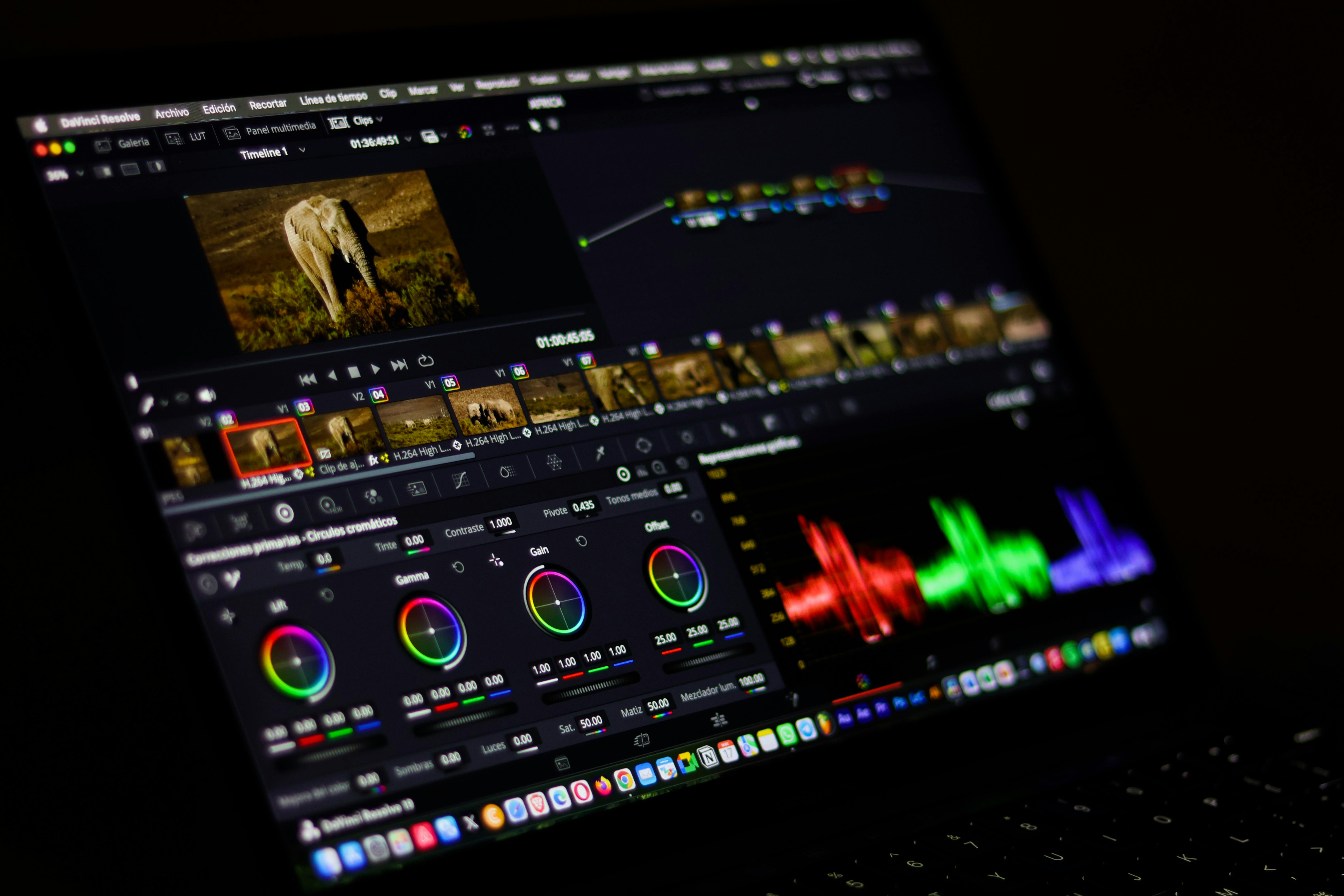
- DaVinci Resolve Studio (AI-Enhanced): Blackmagic Design's DaVinci Resolve has evolved into an all-in-one post-production suite, excelling in color grading, editing, VFX (Fusion), and audio (Fairlight). Its AI capabilities in 2026 include Magic Mask for ultra-fast object isolation, intelligent noise reduction, Face Refinement for automated beauty work, and enhanced scene cut detection. Resolve's one-time purchase model makes it highly attractive for freelancers and studios seeking a comprehensive, powerful, and subscription-free solution, though it demands significant hardware resources.
- Descript (AI-First Text-Based Editor): For content creators, marketers, and anyone prioritizing speed and ease of editing spoken-word content, Descript is revolutionary. It automatically transcribes your video, allowing you to edit the video by simply editing the text. By 2026, its AI features include sophisticated filler word removal, AI-powered voice cloning for corrections, multi-speaker identification, and an expanding suite of generative AI tools for creating short clips and social media assets. It's a game-changer for podcasts, vlogs, and corporate communications, offering unparalleled efficiency for specific workflows.
- Videomatic AI (Cloud-Native Automation Platform): Representing the new wave of purely AI-driven, cloud-based solutions, Videomatic AI (a leading example in this emerging category) specializes in rapid content generation and repurposing. It excels at taking raw footage and automatically generating highlight reels, social media snippets, and even basic marketing videos based on user prompts and brand guidelines. Its strengths lie in extreme automation, collaborative cloud workflows, and scalability for businesses needing high volumes of templated video content quickly, often with a subscription-based, usage-tiered pricing.
Here's a detailed comparison to help you weigh your options:
| Feature/Platform | Adobe Premiere Pro | DaVinci Resolve Studio | Descript | Videomatic AI |
|---|---|---|---|---|
| Primary AI Strength | Comprehensive suite (Sensei), deep integration, robust tracking, transcription, auto-reframing. | Magic Mask, advanced noise reduction, face refinement, scene cut detection, color matching. | Text-based editing, filler word removal, voice cloning, automatic highlight generation. | Automated video generation, repurposing, social media clip creation, template-driven. |
| Target User | Professional studios, agencies, experienced editors, complex productions. | High-end post-production, colorists, VFX artists, freelancers, comprehensive workflow. | Content creators, podcasters, marketers, educators, anyone needing fast, text-driven edits. | Small businesses, social media managers, marketing teams, high-volume content producers. |
| Pricing Model | Subscription (Creative Cloud). | One-time purchase (Studio version), Free version available. | Subscription (tiered based on usage/features). | Subscription (tiered based on usage/features/API calls). |
| Ease of Use (AI Features) | Moderate to High (requires understanding of professional NLE). | Moderate to High (comprehensive suite, some learning curve). | High (intuitive, text-based workflow is very accessible). | Very High (template-driven, minimal editing required). |
| Collaboration Features | Excellent (Team Projects, Creative Cloud Libraries). | Excellent (Shared Projects, Project Server). | Excellent (Cloud-based, real-time collaboration). | Excellent (Cloud-based, team workspaces, asset sharing). |
| Hardware Requirements | Moderate to High. | High (especially for advanced features). | Low to Moderate (cloud-centric). | Low (fully cloud-based). |
Outlook & Trends
The trajectory of AI in video editing points towards even more profound integration and autonomy. By the end of the decade, we can anticipate:
- Hyper-Personalized Content Generation: AI won't just edit existing footage; it will generate entire video segments, characters, and environments tailored to individual viewer preferences, making personalized advertising and interactive storytelling commonplace.
- AI Directors and Storytellers: Advanced AI could analyze scripts, suggest camera angles, shot compositions, and even generate rough cuts that adhere to narrative arcs, acting as a virtual assistant director.
- Seamless XR/VR/AR Integration: AI will be crucial for editing volumetric video, optimizing content for augmented and virtual reality experiences, and real-time rendering in immersive environments.
- Ethical AI & Content Provenance: Tools for detecting AI-generated content, verifying media authenticity, and ensuring ethical use of deepfake technology will become standard features, addressing growing concerns about misinformation.
- Enhanced Accessibility & Inclusivity: AI will further democratize video creation, offering advanced tools for users with disabilities, and automating complex tasks like sign language translation and audio descriptions.
- Energy Efficiency: As AI models become more sophisticated, there will be a focus on developing more energy-efficient algorithms and cloud infrastructure to mitigate the environmental impact of intensive AI processing.
The role of the human editor will continue to evolve, shifting from manual labor to creative oversight, strategic direction, and prompt engineering. The most successful professionals will be those who master the art of collaborating with AI, leveraging its power to amplify their vision and deliver unparalleled results.
Conclusion
In 2026, AI video editing software is not merely an optional upgrade; it's a fundamental pillar of efficient, cost-effective, and creatively boundless video production. The tools available today offer unprecedented opportunities to automate tedious tasks, enhance visual quality, and accelerate workflows, ultimately delivering a significant return on investment for any serious content creator or production house.
Whether you're a professional studio needing the robust ecosystem of Adobe Premiere Pro, a high-end freelancer favoring DaVinci Resolve's comprehensive suite, a content creator leveraging Descript's text-based efficiency, or a business seeking rapid automation with platforms like Videomatic AI, there's an AI solution perfectly tailored to your needs. Evaluate your current workflow, identify your bottlenecks, and confidently invest in the AI technology that will not only meet the demands of today but also future-proof your creative endeavors for years to come. The future of video editing is here, and it's powered by AI – are you ready to unlock its full potential?