
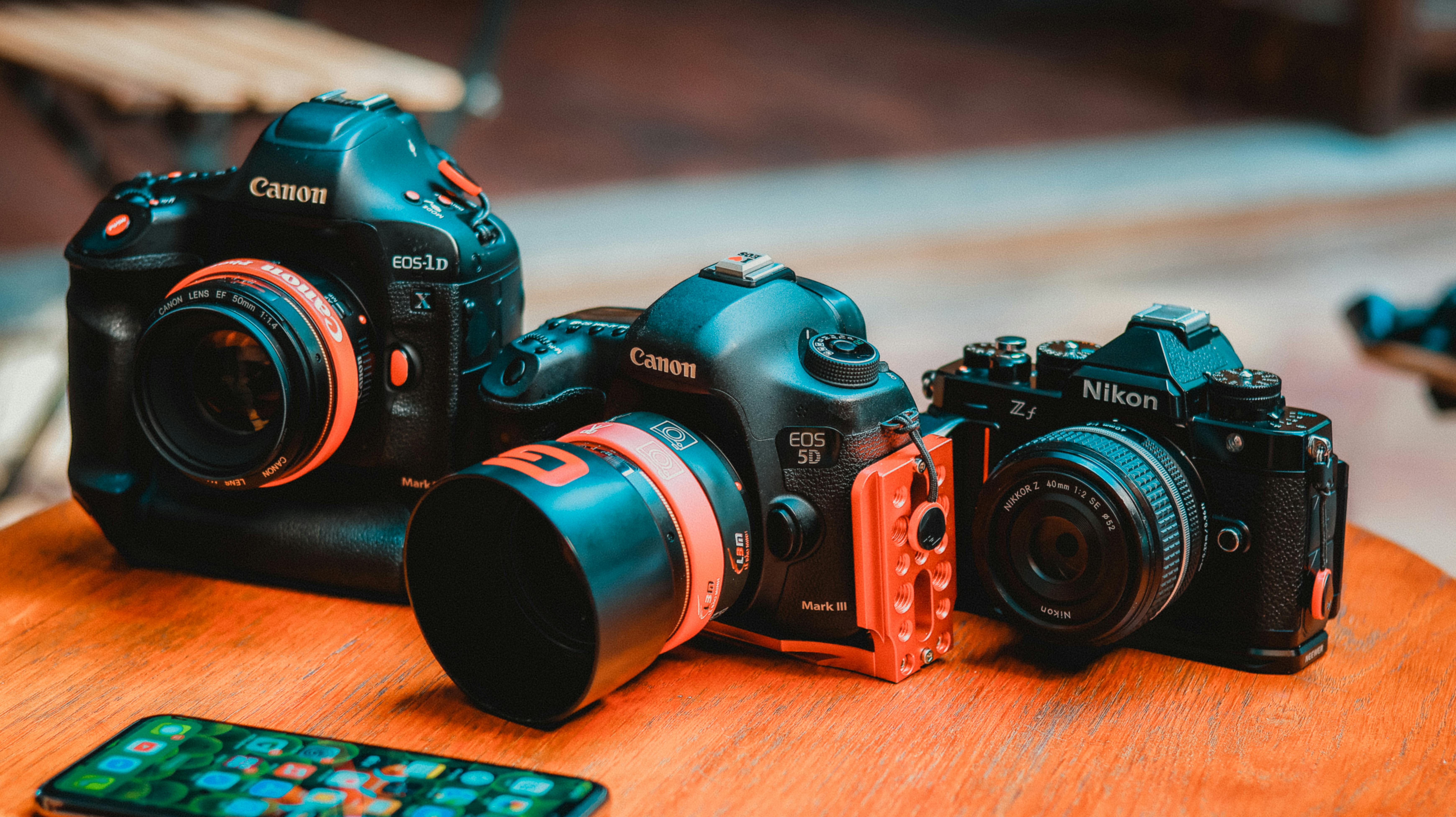
The era of rolling shutter distortion is over! Discover how Global Shutter technology is revolutionizing professional photography and videography in 2026, eliminating jello effect and banding. Compare the top mirrorless cameras featuring this game-changing tech and find your next essential gear upgrade for unparalleled image quality and speed.
Introduction to the Global Shutter Revolution
Welcome to 2026, where the cutting edge of camera technology isn't just about more megapixels or higher frame rates – it's about fundamentally changing how we capture light. For years, professional photographers and videographers have grappled with the inherent limitations of rolling shutter sensors: the dreaded 'jello effect,' distorted verticals, and frustrating flash banding. These artifacts have plagued fast-action shots, concert photography, and high-stakes cinematic productions, forcing compromises in creative vision and execution.
But no more. The year 2026 marks a pivotal moment, as Global Shutter (GS) technology finally moves from niche, high-end cinema cameras into mainstream, accessible mirrorless systems. This isn't just an incremental upgrade; it's a paradigm shift that promises to redefine image integrity, unlock new creative possibilities, and future-proof your investment in camera gear. If you're serious about your craft, understanding and adopting global shutter technology isn't optional – it's essential.
Backgrounds & Facts: The End of Rolling Shutter Woes
To truly appreciate the global shutter revolution, it’s crucial to understand the problem it solves. Most digital cameras, from your smartphone to high-end mirrorless systems, utilize a rolling shutter. This means the sensor doesn't capture the entire image simultaneously. Instead, it scans the scene line by line, from top to bottom. While incredibly efficient and cost-effective for manufacturing, this sequential readout creates a host of issues, especially with fast-moving subjects or when the camera itself is in motion:
- Jello Effect/Skew: Rapid panning or subject movement can cause straight lines to appear bent or skewed, giving a 'jelly-like' wobble to the footage.
- Flash Banding: When using strobes or flashes with a rolling shutter, the sensor might only capture a portion of the flash's brief illumination, resulting in dark bands across the image.
- Propeller Distortion: Aircraft propellers or helicopter blades appear unnaturally bent or warped.
- Motion Artifacts in VFX: For visual effects work, clean plates are paramount. Rolling shutter artifacts complicate rotoscoping and compositing, adding significant post-production time and cost.
Global shutter sensors, by contrast, capture every pixel on the sensor at precisely the same instant. Imagine a single, instantaneous flash illuminating the entire sensor simultaneously. This fundamental difference eliminates all the aforementioned rolling shutter artifacts, delivering perfectly undistorted images, even in the most challenging scenarios. Historically, global shutters were expensive to produce, limited in dynamic range, and often came with higher noise levels. However, breakthroughs in stacked sensor design, faster processing architectures, and advanced manufacturing techniques have overcome these hurdles, making global shutter mirrorless cameras a viable and superior option for 2026 and beyond.
Expert Opinion / Analysis: A Professional Necessity
We spoke with Dr. Lena Petrova, a leading imaging scientist and consultant for major camera manufacturers, about the impact of global shutter technology. "For years, global shutter was the holy grail for professional filmmakers and high-speed photographers," says Dr. Petrova. "The performance gap between rolling and global shutter was simply too wide for mainstream adoption, primarily due to cost and image quality trade-offs. But in 2026, we're seeing the maturation of this technology. Modern GS sensors offer comparable dynamic range and low-light performance to their rolling shutter counterparts, but with the invaluable benefit of artifact-free capture."
The implications are profound across various professional fields:
- Sports & Action Photography/Videography: Capture every decisive moment with perfect fidelity, whether it's a golf swing, a race car speeding by, or a gymnast mid-air. No more skewed bats or wobbly wheels.
- Visual Effects (VFX) & Virtual Production: Clean plates are no longer a dream. Global shutter simplifies chroma keying, motion tracking, and 3D integration, drastically reducing post-production time and ensuring seamless composites. This is a game-changer for LED wall virtual production sets.
- Broadcast & Live Events: Flawless image quality under rapidly changing lighting conditions and fast-paced action, crucial for live sports coverage and news gathering.
- Industrial & Scientific Imaging: Precision is paramount. Global shutter ensures accurate data capture for machine vision, robotics, and scientific research.
- Drone Cinematography: Eliminate the jello effect often exacerbated by drone vibrations and fast movement, leading to significantly smoother, more professional aerial footage.
"Investing in a global shutter camera in 2026 isn't just buying a new piece of gear; it's investing in future-proof capabilities and a competitive edge," Dr. Petrova concludes. "Clients are increasingly expecting artifact-free footage, and global shutter delivers that peace of mind."
💰 Best Options in Comparison (VERY IMPORTANT)
As the market rapidly evolves, several manufacturers have introduced compelling global shutter mirrorless cameras, catering to different professional needs and budgets. Here are some of the top contenders making waves in 2026:
- Apex Vision GS-1: The Full-Frame Powerhouse
A true flagship, the Apex Vision GS-1 boasts a 61MP full-frame global shutter sensor, delivering breathtaking detail for both stills and 8K video. Its advanced AI-driven autofocus system, robust build, and extensive professional codec support make it ideal for high-end cinematic productions, demanding wildlife photographers, and broadcast professionals. Expect a premium price point, but an unparalleled performance ceiling. - Chroma X-GS Pro: The Versatile APS-C Champion
For those seeking a more compact, agile, yet incredibly capable system, the Chroma X-GS Pro stands out. Featuring a 32MP APS-C global shutter sensor, it offers stunning 6K video at 60fps and 4K at 120fps, making it a favorite among documentary filmmakers, event videographers, and action sports creators. Its excellent in-body image stabilization (IBIS) and intuitive user interface make it a joy to use on the go. - Spectra ProCam GS: The Cinema Specialist
Designed from the ground up for cinematic excellence, the Spectra ProCam GS integrates a 4K Super35 global shutter sensor with a focus on color science and robust workflow. It supports internal RAW recording, offers multiple customizable user buttons, and features integrated ND filters. While its photographic capabilities are secondary, its video output is pristine, making it a top choice for indie filmmakers and rental houses.
To help you navigate these cutting-edge options, here's a detailed comparison:
| Feature | Apex Vision GS-1 | Chroma X-GS Pro | Spectra ProCam GS |
|---|---|---|---|
| Sensor Type | Full-Frame Global Shutter | APS-C Global Shutter | Super35 Global Shutter |
| Photo Resolution | 61 Megapixels | 32 Megapixels | 8.3 Megapixels (Video-centric) |
| Max Video Resolution/FPS | 8K 30p / 4K 120p | 6K 60p / 4K 120p | 4K DCI 120p / 2K 240p |
| Autofocus System | AI Real-time Tracking AF | Hybrid Phase-Detect AF | Contrast-Detect w/ Face Tracking |
| Image Stabilization | 5-Axis IBIS + Digital IS | 6-Axis IBIS | Electronic IS (Lens Dependent) |
| Internal Recording | All-I H.265, ProRes RAW (Ext.) | H.265, ProRes LT/HQ | CinemaDNG RAW, ProRes 4444 |
| Price (Approx.) | $7,999 USD | $3,999 USD | $5,499 USD |
| Target User | High-End Pro Filmmakers/Photographers | Documentary/Event/Action Creators | Independent Filmmakers/Rental Houses |
Outlook & Trends: The Future is Artifact-Free
The widespread adoption of global shutter technology in 2026 is just the beginning. We anticipate several key trends that will further cement its dominance:
- Democratization: As manufacturing processes become more refined and costs decrease, global shutter sensors will trickle down into more affordable camera bodies, and eventually into high-end smartphones and consumer drones, making artifact-free capture accessible to everyone.
- Computational Photography Synergy: Global shutter provides a perfectly clean canvas for advanced computational photography techniques. Without rolling shutter artifacts to correct, AI algorithms can focus entirely on enhancing dynamic range, noise reduction, and creative effects with unprecedented precision.
- Specialized Applications: Expect to see global shutter technology optimized for niche applications, such as ultra-high-speed industrial inspection, advanced robotics, and even medical imaging, where precision and lack of distortion are paramount.
- New Lens Designs: With the elimination of motion artifacts, lens manufacturers might explore new optical designs that were previously problematic with rolling shutters, potentially leading to even sharper and more versatile optics.
The future of imaging is undeniably global shutter. It's a technology that removes a significant technical hurdle, allowing creators to focus purely on their artistic vision without worrying about the limitations of their hardware.
Conclusion: Make the Smart Upgrade Now
In the rapidly evolving world of camera technology, making the right investment is crucial for staying competitive and delivering the highest quality work. In 2026, the choice is clear: global shutter cameras are no longer a luxury but a professional necessity. They eliminate the frustrating distortions of rolling shutters, open doors to new creative possibilities, and ensure your footage is pristine and future-proof.
Whether you're a high-end cinematic producer, a dynamic event videographer, or a meticulous sports photographer, there's a global shutter mirrorless camera designed to elevate your craft. Don't let outdated technology hold you back. Explore the Apex Vision GS-1, Chroma X-GS Pro, or Spectra ProCam GS today, and step into an era where every pixel is captured with perfect precision. Your clients, and your creative vision, will thank you.