
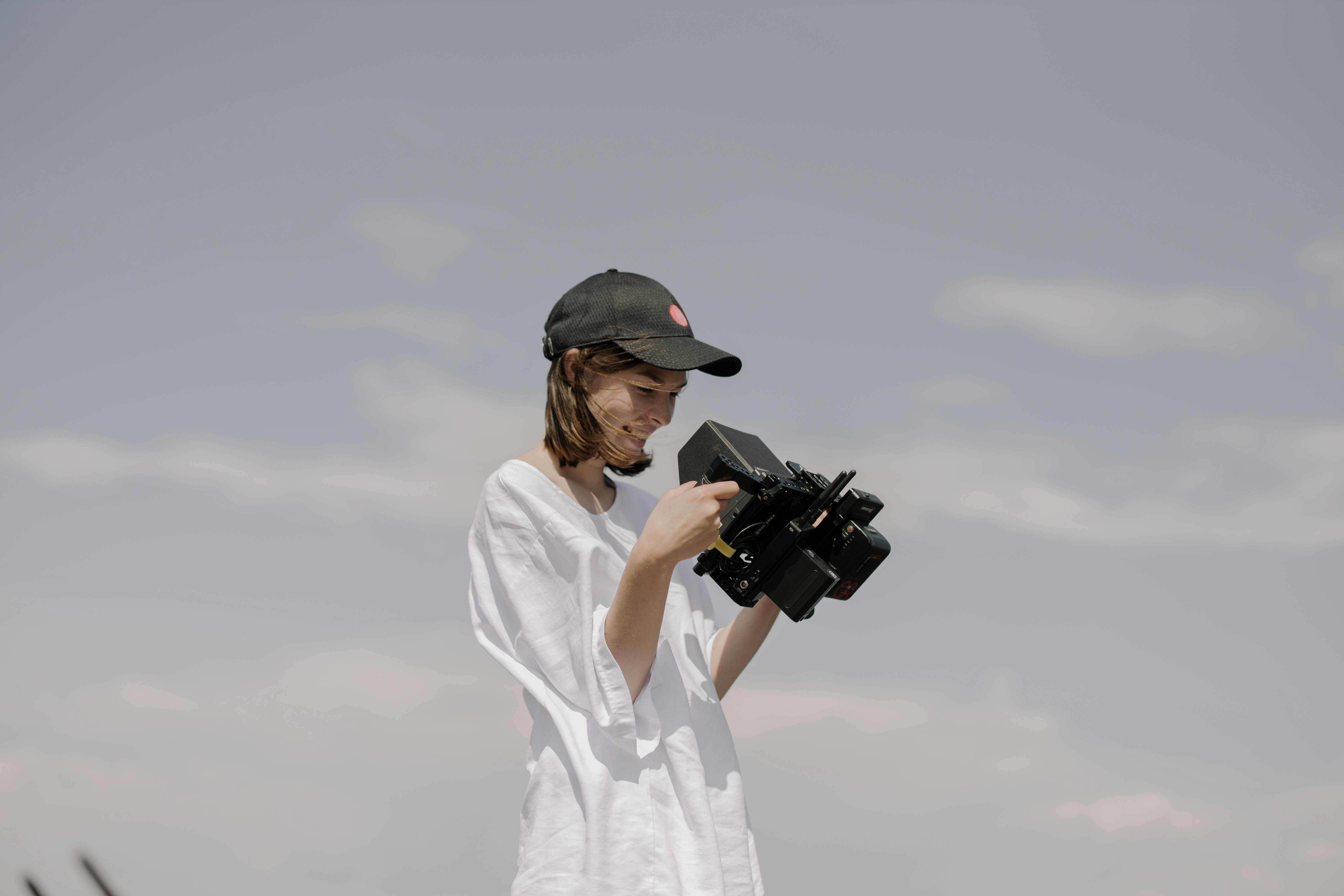
Uncover the groundbreaking AI filmmaking tools of 2026 that are redefining every stage of production, from intelligent script analysis and virtual cinematography to advanced post-production automation. This comprehensive guide helps you navigate the top AI solutions, compare their features, and invest in technologies designed to dramatically enhance creative output, optimize budgets, and accelerate your filmmaking workflow. Future-proof your craft with the essential AI platforms dominating the industry.
Introduction to the Topic
Welcome to 2026, where the hum of a camera is increasingly accompanied by the silent, relentless processing power of artificial intelligence. The once-futuristic concept of AI in filmmaking is no longer a distant dream but a tangible, indispensable reality, fundamentally reshaping how stories are told and brought to life on screen. For independent creators and major studios alike, AI isn't just another tool in the arsenal; it's becoming the very fabric of modern cinematic creation, promising unparalleled efficiency, breathtaking creative freedom, and a dramatic reduction in production costs.
Forget the fear-mongering narratives of robots replacing artists. In 2026, AI serves as an immensely powerful co-pilot, an intelligent assistant capable of handling the most tedious, time-consuming, and technically complex aspects of filmmaking. From generating nuanced script insights and designing intricate virtual sets to automating complex visual effects and mastering audio with a click, AI is democratizing high-end production values. This isn't just about making films faster; it's about empowering filmmakers to push artistic boundaries further than ever before, transforming vision into reality with unprecedented speed and precision. The question is no longer if you'll integrate AI into your workflow, but which intelligent partners will unlock your next masterpiece.
Backgrounds & Facts
The journey of AI in creative industries has been a fascinating ascent, evolving from rudimentary algorithms assisting with data analysis in the early 2010s to sophisticated generative models capable of creating photorealistic imagery and complex narratives by the mid-2020s. In filmmaking, this evolution has been particularly rapid and impactful. Initially, AI's presence was subtle – optimizing rendering farms, suggesting color grading presets, or assisting with basic object tracking. However, the last few years have witnessed a seismic shift.
Today, AI's influence permeates the entire filmmaking pipeline. In pre-production, AI-powered script analysis tools can predict audience reception, identify pacing issues, and even generate alternative dialogue. Storyboard AI generators translate text into visual sequences, accelerating the conceptualization phase. Virtual production, a technology heavily reliant on AI for real-time scene generation and actor integration, has become a cornerstone for blockbuster productions, allowing directors to shoot complex scenes in virtual environments that react instantly to camera movements and lighting changes. This significantly reduces location scouting, set building, and reshoot costs.
In post-production, AI's capabilities are truly transformative. Intelligent editing suites automatically synchronize footage, suggest optimal cuts, and even generate rough assemblies. Visual effects (VFX) artists leverage generative AI to create realistic digital doubles, de-age actors with uncanny precision, remove unwanted objects from frames in seconds, and even conjure entire fantastical landscapes from simple prompts. AI-driven color grading tools learn a film's aesthetic and apply consistent looks across disparate footage. Sound design and music composition have also seen revolutionary advancements, with AI capable of generating bespoke scores, cleaning audio tracks, and creating immersive soundscapes that adapt to on-screen action. The global market for AI in media and entertainment is projected to exceed $10 billion by 2027, underscoring the immense investment and confidence in these technologies.
Expert Opinion / Analysis
To truly grasp the magnitude of this shift, we turned to Dr. Anya Sharma, a leading expert in Cinematic AI Research at CineTech Labs. “The narrative around AI in filmmaking has matured dramatically,” Dr. Sharma explains. “In 2023, there was apprehension; by 2026, it’s an undeniable asset. We’re seeing a paradigm shift where AI isn’t just automating tasks; it’s enabling entirely new forms of storytelling and visual expression that were previously cost-prohibitive or technically impossible for all but the largest studios.”
Dr. Sharma highlights several key benefits. “The most immediate impact is on efficiency and cost reduction. Imagine a small indie team having access to a virtual production stage that adapts in real-time, or a post-production workflow where AI handles rotoscoping and clean-up in a fraction of the time. This democratizes high-end filmmaking, leveling the playing field significantly.” She continues, “Beyond efficiency, AI is a powerful creative catalyst. It allows filmmakers to iterate ideas faster, explore more visual possibilities, and focus their human ingenuity on the truly artistic decisions, offloading the repetitive or technically demanding work to intelligent systems.”
However, Dr. Sharma also offers a nuanced perspective on the challenges. “The ethical implications, particularly around deepfakes and generative content, are paramount. Industry standards and regulatory frameworks are rapidly evolving to ensure responsible use and proper attribution. Furthermore, while AI can assist, it cannot replace the human touch, the emotional intelligence, or the unique vision of a director. The most successful implementations of AI are those that augment, rather than dictate, the creative process. It’s about leveraging these tools to amplify human artistry, not diminish it.” The future, she asserts, belongs to the hybrid filmmaker – one who masterfully wields both traditional craft and cutting-edge AI.
💰 Best Options in Comparison (VERY IMPORTANT)
Navigating the burgeoning landscape of AI filmmaking tools can be daunting. To help you make informed decisions and invest wisely, we've identified the top 5 essential AI platforms making waves in 2026, offering diverse capabilities across the production spectrum. Each of these tools represents a significant leap forward, promising to enhance your workflow and elevate your final product.
1. StoryForge AI: The Intelligent Screenwriting & Pre-Viz Engine
StoryForge AI is revolutionizing pre-production by offering comprehensive AI assistance for script development and visual conceptualization. This platform analyzes narrative structure, character arcs, and dialogue effectiveness, suggesting improvements for pacing and emotional impact. Its standout feature is the integrated AI-driven storyboard and animatic generator, which can translate script segments into detailed visual sequences, complete with character models and environment mock-ups, in minutes. Perfect for indie filmmakers and studios looking to rapidly iterate on story ideas and visualize complex scenes before a single frame is shot.
2. VirtuScene Pro: Real-Time Virtual Production & Set Design
For filmmakers embracing the future of virtual production, VirtuScene Pro is an indispensable tool. Leveraging advanced generative AI and real-time rendering, VirtuScene Pro allows directors and cinematographers to design, customize, and interact with photorealistic virtual environments on the fly. Its intuitive interface enables dynamic lighting changes, environmental effects, and even AI-powered crowd generation, all synchronized with camera tracking systems. This platform dramatically reduces the need for physical sets and location shoots, offering unparalleled creative control and significant cost savings.
3. EditGenius X: The AI-Powered Editing Assistant
EditGenius X is redefining post-production with its intelligent editing capabilities. This AI assistant learns your editing style and project requirements, automating tedious tasks like initial footage synchronization, multi-cam editing, and even suggesting optimal cut points based on narrative flow and emotional impact. It features advanced object removal, de-aging, and color grading presets that adapt to your footage, drastically cutting down on manual labor. EditGenius X is a game-changer for editors looking to accelerate their workflow without compromising creative control.
4. PixelSculpt AI: Generative VFX & Digital Asset Creation
When it comes to visual effects, PixelSculpt AI stands alone. This powerful platform uses state-of-the-art generative AI to create incredibly realistic digital assets, environments, and complex VFX sequences from simple text prompts or reference images. Need a fantastical creature, a bustling futuristic city, or a specific atmospheric effect? PixelSculpt AI can generate high-fidelity elements, offering unparalleled flexibility and speed for VFX artists. Its smart compositing features also integrate AI-generated elements seamlessly into live-action footage, making high-end VFX accessible to a broader range of productions.
5. SonicSynth Studio: AI-Driven Sound Design & Scoring
Sound is half the picture, and SonicSynth Studio ensures your audio is as compelling as your visuals. This AI-powered platform provides comprehensive tools for automated audio clean-up, dialogue enhancement, and ambient soundscape generation. Its most revolutionary feature is its generative music composition engine, which can create bespoke scores tailored to specific scene moods, pacing, and emotional arcs. SonicSynth Studio analyzes your footage and narrative to produce royalty-free music and sound effects, giving filmmakers access to professional-grade audio without the traditional costs and complexities.
| AI Tool | Primary Function | Target User | Key Features | Pricing Model | Pros | Cons |
|---|---|---|---|---|---|---|
| StoryForge AI | Script Analysis & Pre-visualization | Screenwriters, Directors, Producers | Narrative analysis, AI storyboard/animatic generation, character/environment mock-ups. | Tiered monthly subscription (starting $49/month) | Rapid iteration, visualize complex scenes, cost-effective pre-production. | Learning curve for advanced features, AI suggestions may need human refinement. |
| VirtuScene Pro | Real-Time Virtual Production | Virtual Production Supervisors, Cinematographers, VFX Artists | Generative virtual environments, real-time lighting/effects, AI crowd generation, camera sync. | Project-based licensing or enterprise subscription | Unparalleled creative control, significant cost savings on sets/locations, fast iteration. | Requires powerful hardware, initial setup can be complex, high entry cost for smaller teams. |
| EditGenius X | Intelligent Editing & Post-Production | Editors, Post-Production Houses, Indie Filmmakers | Automated sync/multi-cam, suggested cuts, object removal, de-aging, adaptive color grading. | Subscription ($79/month or $799/year) | Massive time savings, enhanced editing precision, handles tedious tasks. | Can be overly prescriptive, integration with non-standard codecs might vary. |
| PixelSculpt AI | Generative VFX & Digital Asset Creation | VFX Artists, Concept Artists, Game Developers | Text-to-VFX generation, digital doubles, environment creation, smart compositing. | Credit-based system or enterprise subscription | Unprecedented speed in VFX creation, high fidelity, reduces reliance on expensive assets. | Ethical considerations for deepfakes, output consistency can vary with complex prompts. |
| SonicSynth Studio | AI-Driven Sound Design & Scoring | Sound Designers, Composers, Filmmakers | Automated audio clean-up, dialogue enhancement, generative music composition, soundscapes. | Subscription ($59/month or $599/year) | Professional-grade audio accessible, royalty-free assets, saves time and money on scoring. | Generative music can lack unique human touch, limited customization for very specific sounds. |
Outlook & Trends
As we gaze further into the future of AI in filmmaking, 2026 is merely a stepping stone. The next five years promise even more profound integrations and capabilities. We anticipate the rise of hyper-personalized content creation, where AI algorithms adapt films in real-time to individual viewer preferences, creating unique experiences for every audience member. Imagine a film that subtly alters its ending or character interactions based on your emotional responses.
Real-time virtual actors, indistinguishable from their human counterparts and capable of dynamic, AI-driven performances, will become commonplace, offering filmmakers unprecedented control over casting and performance without logistical constraints. Further advancements in generative AI will enable directors to conceptualize and execute entire scenes, from script to screen, within a single integrated AI ecosystem, dramatically shortening production cycles.
Ethical considerations will continue to be a focal point, with robust industry standards and perhaps even governmental regulations solidifying around AI-generated content, ensuring transparency, intellectual property rights, and fair compensation for original artists. The integration of AI directly into camera hardware, drones, and lighting systems will also become standard, creating intelligent production environments that anticipate and respond to the needs of the crew. The lines between virtual and physical production will blur even further, culminating in a truly hybrid filmmaking paradigm where human vision is amplified by boundless computational creativity.
Conclusion
The year 2026 marks a pivotal moment in the history of cinema, one where artificial intelligence has transitioned from a supporting role to a leading co-star in the filmmaking process. These five essential AI tools – StoryForge AI, VirtuScene Pro, EditGenius X, PixelSculpt AI, and SonicSynth Studio – are not merely technological novelties; they are powerful, proven solutions designed to unlock new creative avenues, streamline workflows, and significantly optimize your production budget. They represent an investment not just in software, but in the future of your craft.
Embracing AI is no longer optional for filmmakers who wish to remain competitive and innovative. It’s an opportunity to transcend traditional limitations, transform ambitious visions into stunning realities, and ultimately, tell more compelling stories with greater efficiency and impact. The synergy between human ingenuity and intelligent automation is forging a new golden age of cinema. Explore these tools, integrate them into your workflow, and position yourself at the forefront of this thrilling technological revolution. Your next masterpiece awaits.