
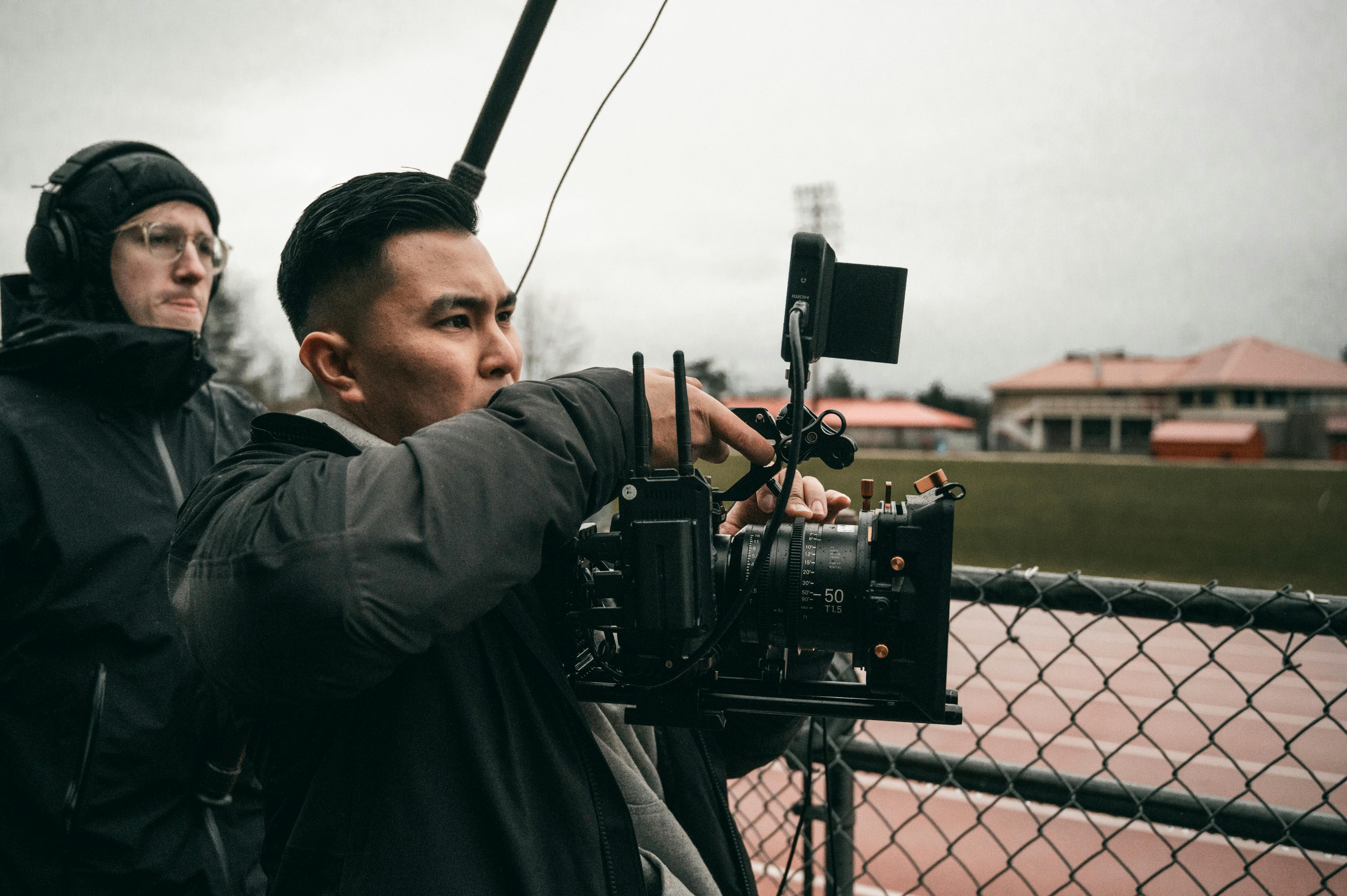
Blocking is often treated as a rehearsal formality. It is the decision that determines every camera position afterwards, and reversing the order produces scenes that feel arranged rather than observed.
Movement establishes the geometry
Where performers stand, sit and move fixes the spatial relationships in a scene, and every subsequent choice about lensing and position is a response to that arrangement.
Deciding camera positions first inverts this. Performers are then placed to suit the frame, which produces the specific stiffness of a scene where nobody moves for any reason internal to it.
Directors who block first typically walk the space with the performers and let the movement emerge from the situation, then find where a camera would need to be to see it.
Blocking creates the cutting points
Movement gives an editor natural places to change shot. A rise, a turn or a step toward someone provides a moment where a cut is motivated rather than merely permitted.
A static scene offers no such moments, which is why it is usually covered with more angles and cut more frequently, and why it can still feel slow despite that.
Well-blocked scenes often need less coverage, because a single sustained shot can hold several changes of emphasis as the performers reposition themselves within the frame.
The line follows from the movement
Screen direction depends on where performers are relative to one another, and blocking establishes that geometry before any camera has to respect it.
Movement that crosses the space during a shot allows the camera to change sides legitimately, which is a considerably cleaner solution than cutting across the line.
Working this out on the floor is far cheaper than discovering in the edit that two shots cannot be joined because the subjects appear to have swapped positions.
Lighting is built around it afterwards
Once movement is set, lighting can be designed to cover the paths performers actually take, rather than illuminating a whole space uniformly in case anyone goes anywhere.
This is why blocking is rehearsed with the crew watching. The camera, lighting and sound teams each need to know the movement before they can prepare their own work.
Where the order legitimately reverses
Some shots exist for their own sake, including establishing views and shots built on a specific optical effect, and those are designed before anyone is placed within them.
Documentary work inverts the sequence entirely, since movement cannot be arranged, which is why operators there rely on anticipation and position themselves for what is about to happen.