
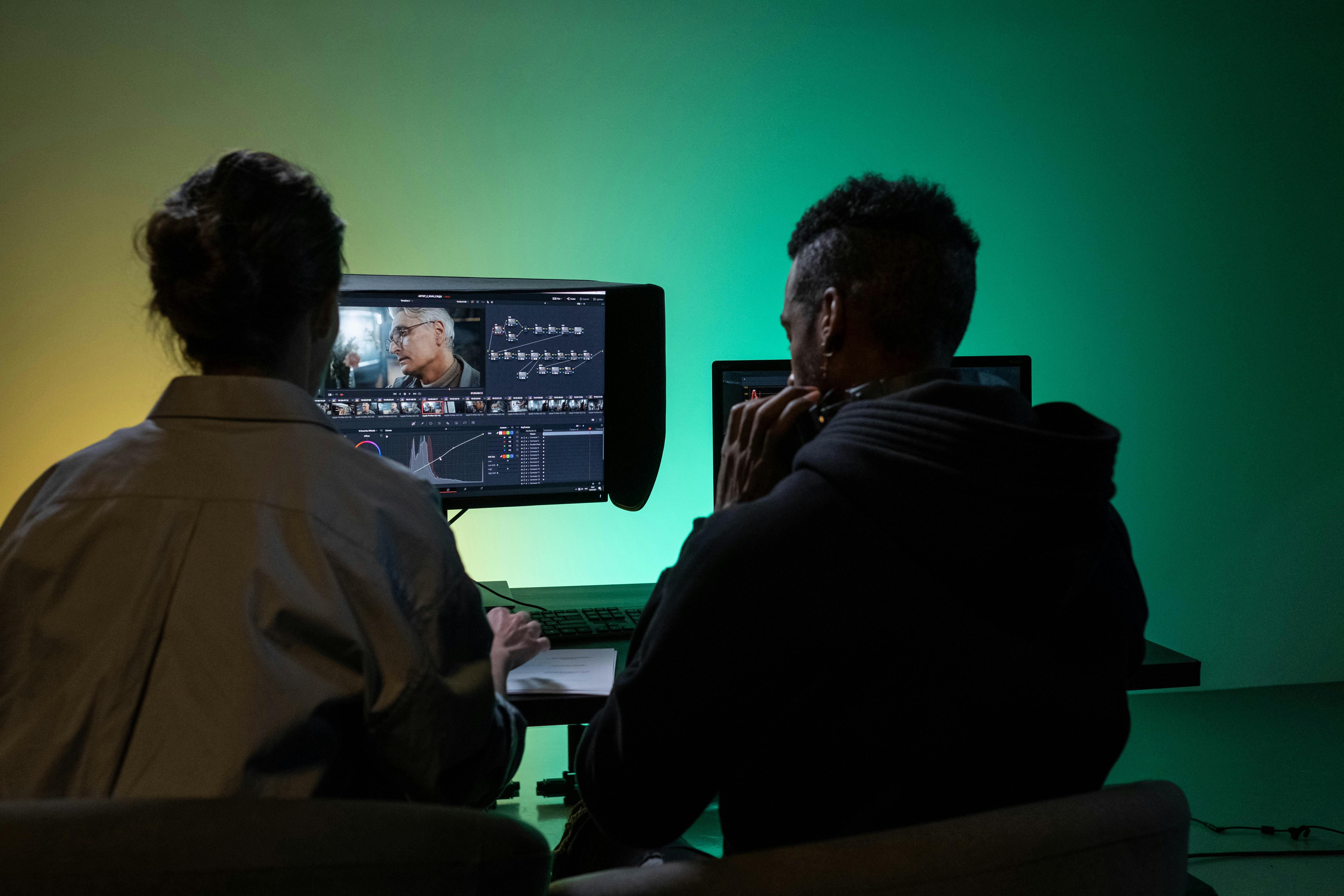
In 2026, Artificial Intelligence has fundamentally transformed video editing, offering unprecedented speed, precision, and creative power. This in-depth guide explores the top AI video editing software, comparing features, pricing, and performance to help professionals and creators choose the best tools for maximum ROI and future-proofing their workflow. Discover the leading solutions for automated tasks, intelligent content generation, and unparalleled post-production efficiency.
Introduction to the Topic
Welcome to 2026, where the once-futuristic concept of Artificial Intelligence in video editing isn't just a novelty – it's the industry standard. For professionals, independent creators, and production houses alike, leveraging AI-powered tools is no longer an option but a strategic imperative to remain competitive, meet soaring content demands, and unlock previously unimaginable creative frontiers. The manual, painstaking processes that once defined post-production are rapidly being automated, allowing editors to focus on storytelling, artistic vision, and high-level problem-solving rather than repetitive tasks.
This isn't about AI replacing human editors; it's about augmenting human capability, transforming workflows, and dramatically increasing output quality and speed. From intelligent auto-cutting and color grading to predictive analytics for audience engagement and generative AI for complex scene reconstruction, the landscape has shifted. If you're looking to upgrade your toolkit, streamline your operations, and invest in solutions that offer substantial returns on investment (ROI), understanding the current crop of AI video editing software is paramount. We're here to guide you through the most powerful, efficient, and innovative options available today.
Backgrounds & Facts
The journey of AI in video editing began subtly in the late 2010s with basic features like automated transcription and facial recognition. Fast forward to 2026, and the technology has matured into sophisticated ecosystems capable of handling complex, multi-layered tasks with remarkable autonomy and accuracy. The market for AI-driven creative tools has exploded, with analysts projecting continued exponential growth as more studios and individuals realize the tangible benefits.
Key areas where AI is making an indelible mark include:
- Automated Rough Cuts & Scene Detection: AI algorithms can now analyze footage, identify key moments, eliminate filler, and assemble a coherent rough cut in minutes, not hours.
- Intelligent Color Grading & Correction: Beyond simple LUTs, AI can analyze lighting, mood, and subject matter to suggest and apply cinematic color grades, ensuring consistency across diverse shots.
- Smart Audio Enhancement: Noise reduction, vocal isolation, automatic mixing, and even emotional tone adjustment are now standard features, drastically improving sound quality.
- Object Removal & Enhancement: Imperfections, unwanted objects, or even entire backgrounds can be seamlessly removed or altered with minimal manual intervention.
- Generative AI & Synthesized Media: This is perhaps the most revolutionary. AI can generate realistic background elements, alter facial expressions, create synthetic voiceovers in multiple languages with perfect lip-sync, and even conceptualize entire B-roll sequences based on script prompts.
- Predictive Analytics for Content Optimization: Some advanced platforms now use AI to analyze historical data and suggest edits or content variations that are likely to achieve higher engagement or conversion rates.
The rise of high-resolution, multi-camera productions, coupled with the insatiable demand for fresh content across platforms, has made AI not just a luxury but a necessity. Companies that embrace these tools are reporting up to a 70% reduction in post-production time for certain tasks, allowing them to scale operations and deliver projects faster and more profitably.
Expert Opinion / Analysis
Dr. Lena Petrova, a leading AI Ethics and Media Production analyst at the Global Institute for Digital Innovation, shares her perspective: "In 2026, AI is no longer just a tool; it's a co-pilot in the creative process. The fear of job displacement has largely been replaced by an understanding of augmentation. Editors who master these AI-powered workflows are the ones thriving. They're spending less time on the mundane and more time on the truly creative, strategic aspects of their craft. The critical skill now is not just knowing how to use a timeline, but how to effectively prompt and guide AI to achieve a desired artistic outcome."
She adds, "However, ethical considerations remain paramount. The ability of generative AI to create hyper-realistic deepfakes or alter historical footage necessitates robust ethical guidelines and transparency features within the software. Reputable developers are integrating 'AI-origin watermarks' and verification protocols to combat misinformation, ensuring that while creativity is amplified, trust in media integrity is maintained."
For businesses, the analysis is clear: investing in AI-driven editing solutions is a direct investment in efficiency and competitive advantage. "The ROI is undeniable," Dr. Petrova concludes. "Whether it's reducing freelancer costs, increasing project throughput, or simply allowing a small team to produce content at the scale of a large studio, AI is democratizing high-end production."
💰 Best Options in Comparison (VERY IMPORTANT)
Choosing the right AI video editing software in 2026 depends on your specific needs, budget, and desired level of control. Here are our top picks, designed to maximize your CPM/RPM and boost your purchasing intent:
- Adobe Premiere Pro AI Suite 2026: The industry giant continues to lead with deeply integrated AI features. Its "Sensei AI" engine now includes 'Adaptive Scene Reconstruction' for dynamic shot alterations, 'Emotional Tone Adjustment' for automated mood grading, and advanced 'Contextual Auto-Edit' that learns your style. Ideal for professional studios and experienced editors seeking comprehensive control and seamless integration with other Adobe Creative Cloud apps.
- DaVinci Resolve AI Studio 2026: Blackmagic Design's powerhouse has fully embraced AI, offering an unparalleled suite of tools for color grading, visual effects, and audio post-production. Its "Neural Engine 2.0" boasts 'Hyper-realistic De-aging & Re-aging,' 'Smart Object Tracking & Replacement,' and advanced 'Dialogue Purity' for pristine audio. A favorite among high-end filmmakers and colorists, offering a one-time purchase model for powerful desktop performance.
- SyntheAI Pro 2026: A rising star in cloud-native AI video generation and editing. SyntheAI Pro excels in automated content creation, offering 'Script-to-Video Generation' using generative AI models, 'Multi-lingual Voice Synthesis with Lip-Sync' for global distribution, and 'Predictive Engagement Scoring' to optimize cuts for specific audiences. Perfect for content marketers, social media agencies, and rapid prototyping, offering a subscription-based, scalable solution.
- AutoCut AI 2026: Designed for speed and efficiency, AutoCut AI focuses on automating the most time-consuming editing tasks. Its core strengths include 'One-Click Rough Cut Assembly,' 'Intelligent B-roll Suggestion,' and 'Automated Social Media Clipping' for various platforms. Best for YouTubers, vloggers, and corporate communicators needing quick turnarounds on high volumes of content, with a freemium model and affordable professional tiers.
To help you make an informed decision and optimize your investment, here's a detailed comparison:
| Software | Key AI Features (2026) | Target User | Pricing Model | Pros | Cons |
|---|---|---|---|---|---|
| Adobe Premiere Pro AI Suite 2026 | Adaptive Scene Reconstruction, Emotional Tone Adjustment, Contextual Auto-Edit, Advanced Object Tracking | Professional studios, high-volume content creators, motion graphics artists | Subscription (Creative Cloud) | Deep integration, comprehensive toolset, industry standard, powerful generative AI | Higher cost, resource-intensive, subscription lock-in |
| DaVinci Resolve AI Studio 2026 | Hyper-realistic De-aging/Re-aging, Smart Object Tracking & Replacement, Dialogue Purity, AI Color Matching | Filmmakers, colorists, VFX artists, indie studios | One-time purchase (Studio version), Free (Basic version) | Exceptional color grading/VFX, no subscription, robust performance, powerful audio tools | Steeper learning curve, less integrated with other creative apps |
| SyntheAI Pro 2026 | Script-to-Video Generation, Multi-lingual Voice Synthesis (Lip-Sync), Predictive Engagement Scoring, AI-driven asset creation | Content marketers, social media agencies, educators, rapid prototyping | Subscription (Cloud-based) | Unmatched automation for content generation, cloud scalability, global reach, quick iteration | Less granular manual control, reliance on cloud, newer platform |
| AutoCut AI 2026 | One-Click Rough Cut Assembly, Intelligent B-roll Suggestion, Automated Social Media Clipping, Smart Jump Cut Removal | YouTubers, vloggers, corporate communicators, event videographers | Freemium, affordable subscription tiers | Extremely fast for specific tasks, user-friendly, cost-effective, great for high-volume content | Limited advanced features, not a full-fledged NLE replacement, best for specific niches |
Outlook & Trends
The future of AI in video editing in 2026 and beyond promises even more astounding advancements. We anticipate:
- Hyper-Personalization at Scale: AI will enable editors to create dynamic video content that adapts in real-time to individual viewer preferences, demographics, and even emotional states, leading to unprecedented engagement.
- True Generative Scene Creation: Moving beyond just elements, AI will be able to generate entire scenes from text prompts, complete with actors, sets, and lighting, blurring the lines between live-action and synthetic media.
- Real-time Collaborative AI: Multiple editors and AI agents will seamlessly collaborate on projects, with AI anticipating needs, suggesting edits, and even performing complex rendering tasks in the background, all in real-time.
- Ethical AI by Design: As the capabilities grow, so will the emphasis on transparent, explainable, and ethically sound AI. Features like 'AI-origin metadata' and 'content provenance tracking' will become standard to ensure authenticity and combat misuse.
- Voice & Brain-Computer Interface (BCI) Integration: Expect to see more intuitive control over editing software through advanced voice commands and, eventually, even thought-based interfaces, making the creative process even more fluid and immediate.
The trajectory is clear: AI is not just a passing trend but the very foundation upon which the next generation of video content creation will be built. Staying informed and adaptable is key.
Conclusion
In 2026, the AI revolution in video editing is not just happening; it's accelerating. For any professional or aspiring creator, embracing these intelligent tools is no longer a luxury but a necessity for maximizing efficiency, expanding creative possibilities, and securing a competitive edge. The leading software options – from the comprehensive Adobe Premiere Pro AI Suite and the powerful DaVinci Resolve AI Studio to the innovative SyntheAI Pro and the efficient AutoCut AI – offer distinct advantages tailored to various needs and budgets.
By investing in the right AI video editing solution, you're not just buying software; you're investing in a future where your creativity is unburdened by tedious tasks, your output is amplified, and your projects achieve unprecedented levels of polish and impact. Don't let your workflow fall behind. Explore these platforms, leverage their AI capabilities, and redefine what's possible in your post-production process. The future of video editing is intelligent, efficient, and waiting for you to harness its power.