
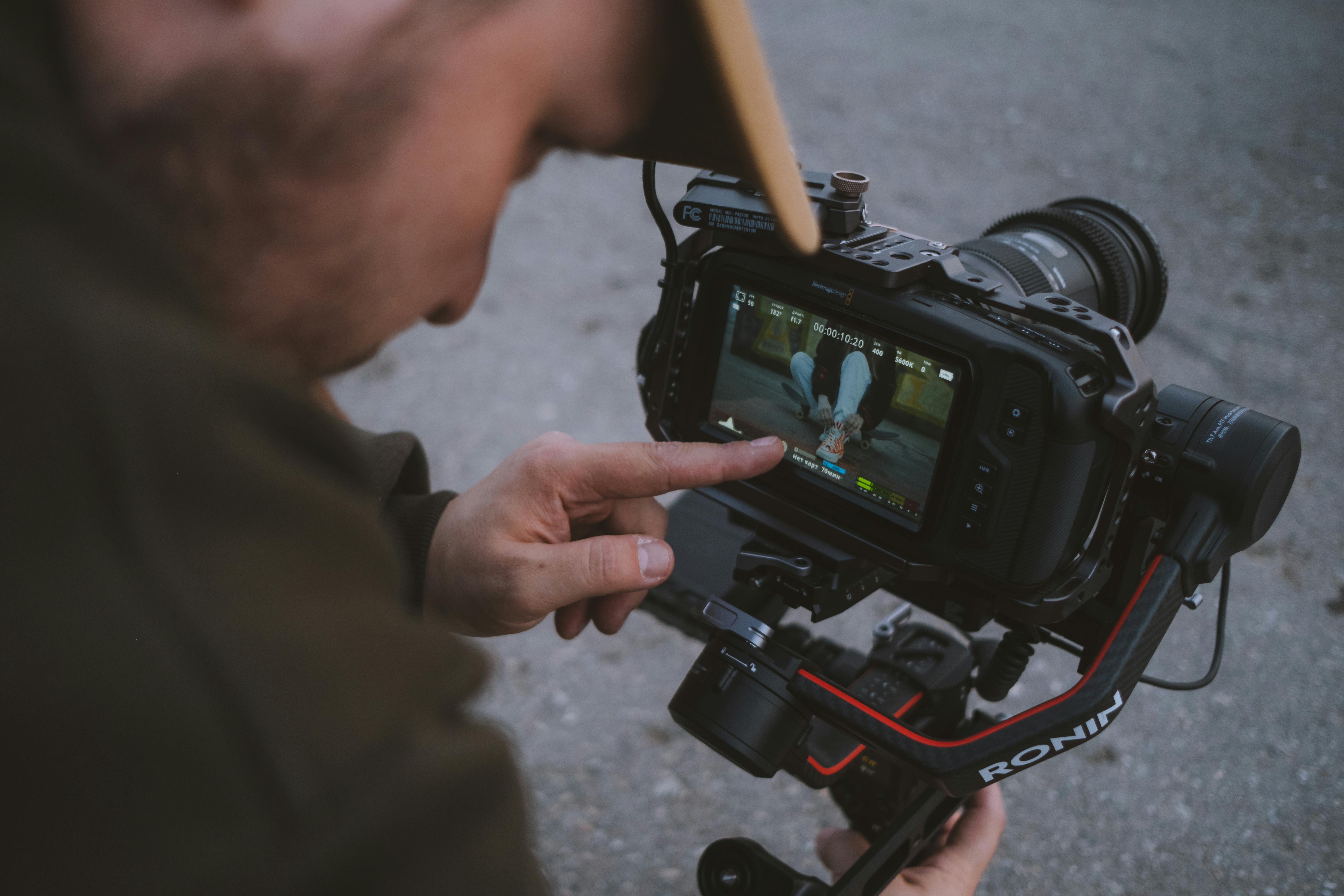
Dive deep into the transformative power of Generative AI in filmmaking for 2026. Explore how AI tools are revolutionizing scriptwriting, virtual production, VFX, and post-production, offering unprecedented efficiency and creative possibilities. Discover the best AI software solutions to optimize your workflow, reduce costs, and elevate your productions, ensuring you stay ahead in the rapidly evolving landscape of cinematic technology.
Introduction to the Topic
In the dynamic world of cinema, innovation is the only constant. For decades, filmmakers have pushed technological boundaries, from the advent of sound and color to CGI and virtual reality. But as we stand in 2026, a new, more profound revolution is upon us: Generative Artificial Intelligence. No longer confined to the realm of science fiction, AI is now an indispensable co-creator, a powerful assistant, and a cost-saving maestro, fundamentally reshaping every stage of film production. From the nascent spark of an idea to the final polished frame, AI-powered tools are democratizing high-end filmmaking, accelerating workflows, and unlocking creative avenues previously unimaginable. This isn't just an evolution; it's a paradigm shift, demanding that filmmakers, producers, and studios adapt, embrace, and invest in the intelligent future of storytelling.
This article will explore the cutting-edge AI technologies driving this change, offer expert insights into their impact, and crucially, guide you through the leading AI solutions available today. Whether you're a seasoned director, an independent producer, or an aspiring creative, understanding and leveraging these tools is no longer optional—it's essential for maximizing your return on investment (ROI) and securing your place in the future of cinematic excellence.
Backgrounds & Facts
The journey of AI in filmmaking began subtly, with early algorithms assisting in tasks like motion tracking and rudimentary visual effects. However, the last five years have seen an explosive acceleration, primarily driven by advancements in Machine Learning, Deep Learning, Generative Adversarial Networks (GANs), Large Language Models (LLMs), and Diffusion Models. These sophisticated AI architectures have moved beyond mere automation, entering the realm of true generation and synthesis.
In pre-production, LLMs like those powering advanced scriptwriting assistants can now analyze existing screenplays for pacing, character arcs, and commercial viability, or even generate entire plot outlines and dialogue variations based on a simple premise. Diffusion models are transforming concept art and storyboarding, allowing artists to rapidly iterate on visual styles, character designs, and environmental layouts with unprecedented speed. Virtual location scouting, powered by generative AI, enables filmmakers to explore photorealistic digital environments before a single physical scout takes place, saving immense time and travel costs.
During production, the impact is equally profound. Virtual production stages, already a staple in major blockbusters, are now leveraging AI to generate dynamic, interactive backgrounds and even populate scenes with photorealistic digital extras in real-time. AI-powered deepfake technology, once a novelty, is now a mature tool for de-aging actors, creating digital doubles, or even facilitating complex character transformations with ethical safeguards in place. Virtual cameras, guided by AI, can simulate complex camera movements and lighting setups, providing directors with immediate feedback and reducing the need for numerous takes.
Post-production, traditionally the most labor-intensive phase, has been revolutionized. AI-driven editing software can now generate initial rough cuts, identify optimal pacing, and even suggest music based on emotional cues. VFX artists are leveraging generative AI to create complex environmental effects, realistic particle simulations, and intricate textures with a fraction of the manual effort. Color grading AI analyzes footage for consistency and applies cinematic looks, while AI audio tools master sound, remove noise, and even generate ambient soundscapes. The sheer volume of data processing and creative output that AI can handle is staggering, pushing the boundaries of what a lean production team can achieve.
Expert Opinion / Analysis
“The filmmaking landscape of 2026 is fundamentally different from even five years ago, primarily due to generative AI,” states Dr. Anya Sharma, lead researcher at CineAI Labs and a respected voice in cinematic technology. “We're witnessing a democratization of high-end tools. What once required a team of specialists and millions in budget can now be achieved by a single creator with powerful AI assistance. This empowers independent filmmakers to compete on a visual and narrative level previously reserved for major studios.”
However, Dr. Sharma also highlights the evolving role of human creativity. “AI isn’t replacing filmmakers; it’s augmenting them. The human element shifts from manual execution to curation, prompt engineering, and ethical oversight. The director becomes an 'AI conductor,' guiding the intelligent tools to realize their unique vision, rather than laboring over every single detail. This demands a new skill set, blending artistic intuition with technological proficiency.”
The ethical implications of AI in filmmaking are a critical point of discussion. “We need robust industry standards for ethical AI deployment,” emphasizes renowned film ethicist, Professor Marcus Thorne. “Concerns around job displacement, copyright ownership of AI-generated content, the potential for misinformation through hyper-realistic deepfakes, and biases inherent in training data are paramount. Studios and developers must prioritize transparency and accountability. The goal should be to elevate human creativity, not diminish it, and to ensure fair compensation and opportunities for all artists in this new era.”
Many industry leaders predict a future where hybrid workflows are standard. “The most successful productions will be those that seamlessly integrate AI into their pipeline, leveraging its speed and efficiency for repetitive or data-heavy tasks, while reserving human talent for the nuanced storytelling, emotional depth, and critical decision-making that only a human can provide,” says veteran producer Elena Rodriguez. “Investing in AI training for your team isn't just about technology; it's about investing in the future-proof capabilities of your creative workforce.”
💰 Best Options in Comparison (VERY IMPORTANT)
Navigating the burgeoning market of AI filmmaking tools can be daunting. To help you make informed investment decisions and optimize your production workflow, we've identified key categories and leading (or highly plausible) solutions available in 2026. These tools are designed to maximize efficiency, reduce costs, and enhance creative output across the entire filmmaking pipeline.
1. Pre-production Powerhouses: Ideation & Visualization
These AI platforms are invaluable for screenwriters, directors, and concept artists, streamlining the initial creative phases.
- StorySculpt AI: A leading LLM-based assistant for script development. It helps writers overcome blocks by suggesting plot points, character arcs, and dialogue. Its genre analysis features provide data-driven insights into audience engagement.
- SceneVision Pro: Utilizing advanced diffusion models, SceneVision Pro generates detailed storyboards and concept art from text prompts or rough sketches. It offers a vast library of styles and character models, accelerating visual development.
2. Production & Virtual World Builders: On-Set & Digital Asset Creation
These tools are game-changers for virtual production supervisors, VFX teams, and producers looking to control costs and enhance creative control over their digital assets.
- MetaCast Studio: This generative AI platform excels at creating photorealistic digital doubles, virtual extras, and sophisticated de-aging effects. It integrates seamlessly with motion capture data, offering unparalleled control over virtual performances.
- EnviraGen AI: A powerful real-time environment generation tool for virtual production stages. It allows filmmakers to create dynamic 3D worlds, populate them with assets, and adjust lighting and weather conditions on the fly, reducing the need for physical sets.
3. Post-production Accelerators: Editing, VFX & Audio
For editors, VFX artists, and sound designers, these AI solutions drastically cut down on tedious tasks, allowing more focus on artistic refinement.
- EditFlow Max: An intelligent editing suite that can analyze raw footage, identify key moments, and generate initial rough cuts. It suggests optimal pacing, transitions, and can even synchronize with music, significantly speeding up the editorial process.
- VFXForge AI: This comprehensive platform offers one-click solutions for complex VFX tasks, including auto-rotoscoping, object removal/insertion, and environmental effects generation. Its deepfake detection module also ensures content authenticity.
To further aid your decision, here’s a detailed comparison of these critical AI tools:
| AI Tool Name | Primary Function | Key Features | Target User | Pricing Model | Pros | Cons |
|---|---|---|---|---|---|---|
| StorySculpt AI | Script & Idea Generation | Plot outlines, character arcs, dialogue suggestions, genre analysis, commercial viability reports | Screenwriters, Directors, Producers | Tiered Subscription ($50-$200/month) | Accelerates ideation, overcomes writer's block, data-driven insights | Can lack unique voice, requires heavy human refinement, potential for generic output |
| SceneVision Pro | Storyboarding & Concept Art | Auto-generates visual sequences, style transfer, character posing, environment design, 3D previz integration | Storyboard Artists, Art Directors, Pre-vis Teams | Per-project ($100-$500), Monthly Subscription ($75-$150) | Rapid visualization, diverse art styles, reduces manual drawing time | Output can be generic without specific prompts, learning curve for advanced features |
| MetaCast Studio | Virtual Actors & Digital Doubles | Realistic digital humans, de-aging, performance transfer, crowd generation, ethical control panels | VFX Supervisors, Producers, Casting Directors | Usage-based (per-character, per-frame, $500+/day) | Reduces casting/shooting costs, ethical control over performances, infinite creative possibilities | Ethical concerns, 'uncanny valley' risk, high processing demands, requires skilled operators |
| EnviraGen AI | Virtual Environment Creation | Real-time 3D environment generation, asset library integration, dynamic weather, photogrammetry import | Virtual Production Supervisors, Set Designers, Game Developers | Enterprise License (Custom), Project-based ($1000-$10,000+) | Infinite creative possibilities, real-time iteration, significant cost savings on physical sets | Requires powerful hardware, integration complexities with existing pipelines, steep learning curve |
| EditFlow Max | Automated Video Editing | Intelligent cut detection, pacing optimization, rough cut assembly, transcription, music synchronization | Editors, Content Creators, Post-Production Houses | Monthly Subscription ($80-$300/month), Tiered features | Drastically speeds up initial edits, consistent quality, frees up editor for creative refinement | Lacks artistic nuance of human editor, can feel formulaic, requires human oversight for final cut |
| VFXForge AI | Generative VFX & Cleanup | Auto-rotoscoping, object removal/insertion, environmental effects, deepfake detection, style transfer | VFX Artists, Post-Production Studios | Usage-based (per-effect, per-minute, $10-$1000+), Enterprise | High efficiency for repetitive tasks, lowers VFX barrier, allows rapid iteration | Can produce artifacts, requires human oversight for quality control, integration with legacy software |
Choosing the right AI tools for your production depends on your specific needs, budget, and creative goals. However, investing in these cutting-edge solutions is paramount for maximizing your project's ROI and staying competitive in 2026 and beyond.
Outlook & Trends
The trajectory of AI in filmmaking points towards even more integrated and sophisticated systems. We can anticipate hyper-personalization, where AI-driven distribution platforms will curate and even subtly modify content to individual viewer preferences, creating unique cinematic experiences for each audience member. This raises fascinating questions about the nature of a 'definitive cut' and copyright.
Ethical AI in film will evolve from discussion to concrete industry standards and regulations. We expect the establishment of 'AI content authenticity' labels and clear guidelines for the use of synthetic media, ensuring transparency and combating misinformation. The industry will need to develop robust frameworks to protect artists' rights and mitigate job displacement through upskilling initiatives and the creation of new roles, such as AI Prompt Engineers, AI Film Directors, and AI Ethics Officers.
The convergence of AI with other immersive technologies like VR, AR, and haptics will create entirely new forms of interactive storytelling. Imagine AI-driven narratives that adapt in real-time based on a viewer's emotional state or physical interactions within a mixed reality environment. The future of filmmaking is not just about watching a story; it's about experiencing it in profound and personalized ways, with AI as the invisible architect.
Ultimately, the biggest trend will be the continued blending of human creativity with artificial intelligence. The most innovative filmmakers will be those who master the art of collaboration with their AI tools, pushing the boundaries of what's possible while maintaining the soul and authenticity that only human storytelling can provide.
Conclusion
The AI revolution is not coming; it is here, and it is reshaping filmmaking as we know it. From pre-visualization to post-production, intelligent tools are offering unprecedented efficiency, cost savings, and creative liberation. For any serious filmmaker, producer, or studio aiming to thrive in 2026 and beyond, embracing and strategically investing in AI technology is no longer an option—it's a necessity. By understanding the landscape of available tools, analyzing their potential, and integrating them thoughtfully into your workflow, you can future-proof your productions, maximize your creative potential, and ensure your stories resonate powerfully in this exciting new era of cinematic innovation.