
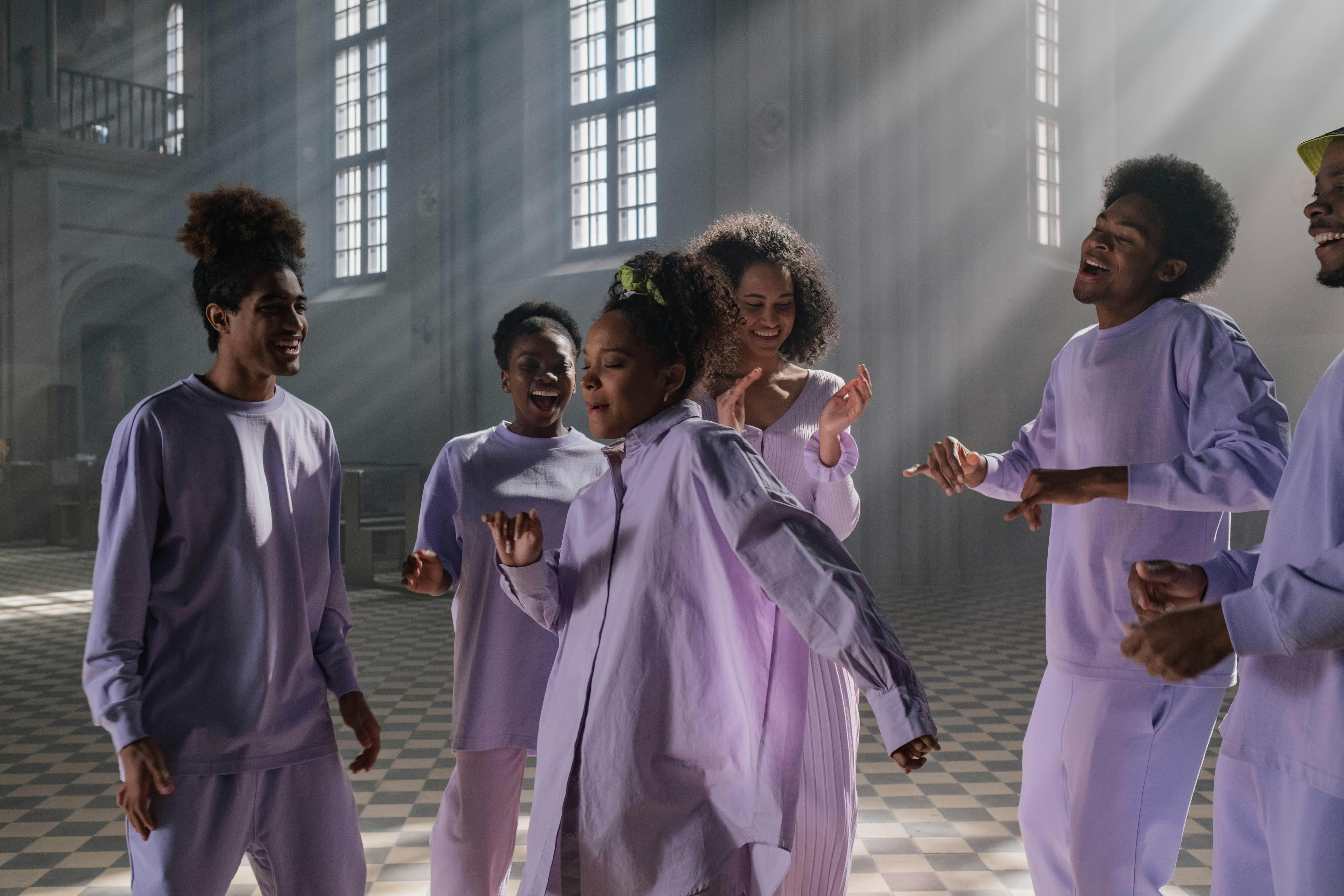
A music video is filmed with the finished track playing loudly on set while performers mime to it. That arrangement is what makes everything else about the format possible.
The recording is fixed before filming begins
The audience will hear the released recording, not anything captured on set, so the audio is already final and unchangeable when the shoot starts.
Performing live to camera would produce a vocal that differs from the record in timing and phrasing, and no amount of editing would align the two convincingly.
Playing the track aloud instead gives everyone a shared reference, so each take is performed against the identical timing and can be matched to it afterwards.
Synchronisation happens in the edit, not on set
Every take is recorded with the playback audible in the camera's own audio, and that captured playback becomes the reference the editor uses to align each shot to the master track.
Because the reference is the same recording, aligning any take is a mechanical operation rather than a judgement, which is why a video can cut between many angles without visible drift.
This is also why takes filmed on different days in different locations can be intercut freely, provided the same track was played on each occasion.
Performers work in fragments
Playback is usually started from a specific point rather than the beginning, so a performer may mime the same eight bars repeatedly across an afternoon.
Maintaining energy across those repetitions is a genuine skill, since the footage must look like a single continuous performance despite being assembled from dozens of separate attempts.
Mouth shapes are the unforgiving part. Viewers detect mismatched lip movement immediately, which is why close-ups are treated as the most demanding shots of the day.
The track can be manipulated for the shoot
Playback is sometimes run at an altered speed so that performers move differently while remaining synchronised once the footage is returned to normal.
Slowing the track and filming at normal speed produces languid movement that speeds up naturally, and the reverse produces the accelerated motion associated with certain visual styles.
Why sound on set still matters
The captured playback is technically poor but essential, and losing it on a take makes alignment far more laborious, which is why cameras record audio even though none of it is used.
Live-performance videos invert the whole arrangement, capturing genuine audio and accepting the synchronisation limits that follow, which is why they look and feel structurally different.